.AHLogo1200x1200Black-07578d9b18173fee3d04bf845fdf5007eba8c3c451a934328392e5221830e241.png)
If you're hiring a PA system for an event, you may be wondering whether you also need an audio mixer. The answer depends largely on how many microphones and other audio sources you need to connect and how much control you want over them during the event.
An audio mixer allows multiple microphones and audio sources to be connected to the same PA system and controlled independently. If your event includes microphones, music, presentations, a DJ or live performers, a mixer can quickly become an important part of the setup.
You don't need to understand mixing desks or audio engineering to work out whether you need one. A much easier place to start is to ask: what needs to make sound during my event?
What Does an Audio Mixer Actually Do?
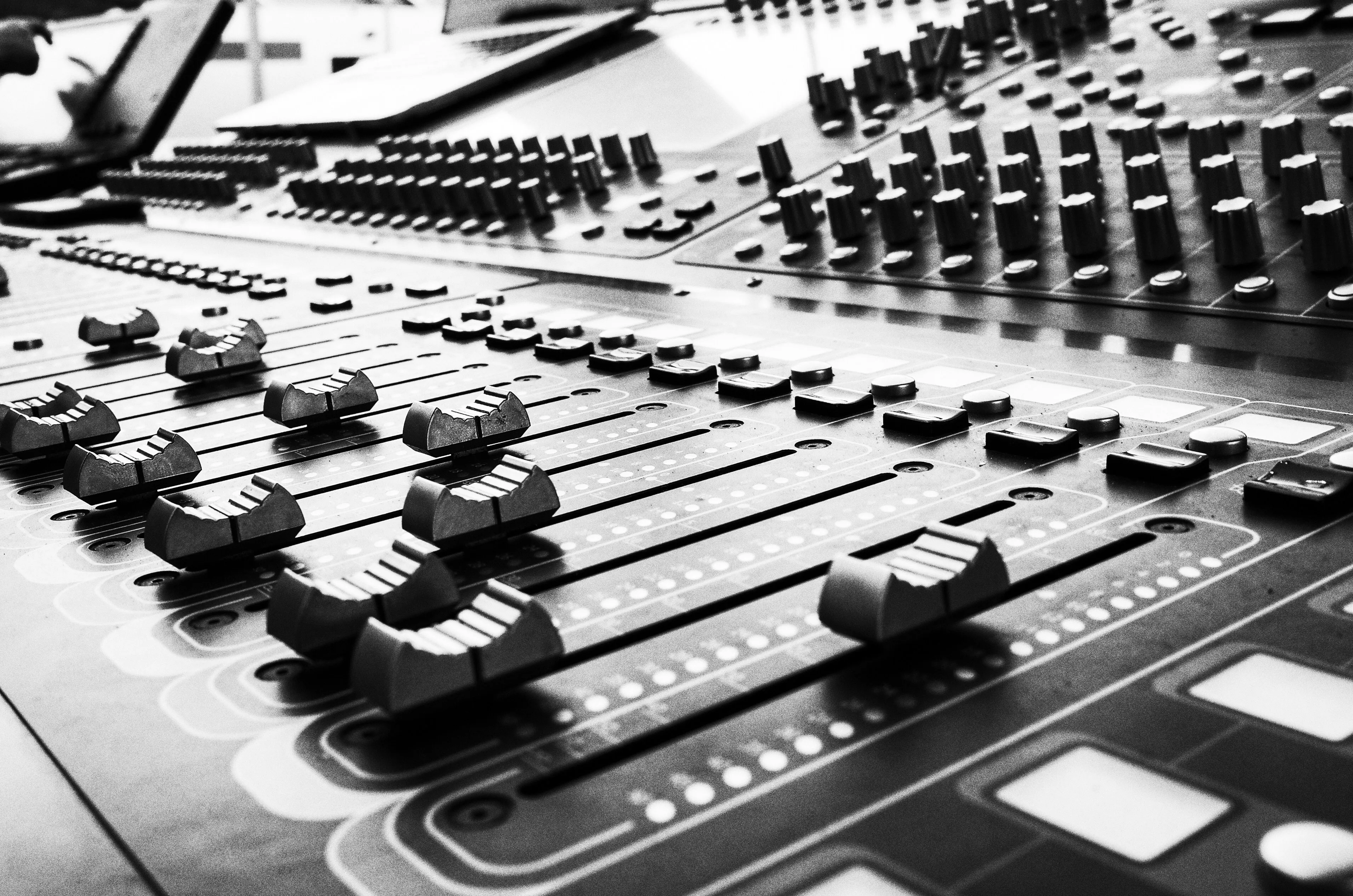
Think of an audio mixer as the control centre of your PA system. Microphones, laptops, phones, DJ equipment, instruments and other audio sources can be connected to the mixer, which then feeds the sound to the PA speakers.
The main advantage is control. If background music is playing and the MC needs to make an announcement, you can reduce the music without changing the microphone level. If one presenter speaks much more quietly than another, their microphone can be adjusted independently.
As the number of microphones and audio sources increases, that individual control becomes increasingly useful.
When Does an Event Need a Mixer?
A mixer is worth considering whenever several things need to be heard through the PA system.
Take a wedding reception as an example. You may have background music playing while guests arrive, a microphone for the MC, another microphone for speeches and perhaps a laptop or other device supplying special music during the formalities.
All of those sources need to connect to the sound system. More importantly, their levels need to change at different times throughout the evening. A mixer brings them together in one place and allows them to be controlled independently.
The same applies to parties. What begins as a straightforward music system can become more involved once you add speeches, an MC, a DJ or live entertainment. If you're planning a music-focused event, our sound system hire options provide a useful starting point for putting together the complete PA system.
Do I Need a Mixer for Speeches?
If your event includes several microphones, a mixer becomes particularly useful.
People don't all speak at the same volume. One person may naturally project their voice and hold the microphone correctly, while another may speak quietly or hold it further away. Having the microphones connected through a mixer allows their levels to be adjusted individually.
This is particularly useful at conferences, panel discussions, awards nights, weddings and presentations where several people may use different microphones throughout the program.
A corporate event might have an MC, two presenters, a panel discussion and audience Q&A. Add presentation videos and walk-on music, and you're no longer dealing with a simple microphone-and-speaker setup. The mixer needs enough capacity for all of those sources.
How Many Mixer Inputs Do I Need?
One of the easiest mistakes is counting only the microphones.
Imagine your event has two microphones, a laptop supplying presentation audio and another device playing background music. You already have several audio sources before anyone decides to add another microphone.
This is why it's useful to plan the mixer around the complete event rather than the original equipment list.
Some spare capacity can also be worthwhile. Events change. Another speaker may be added to the program, audience Q&A may suddenly require another microphone, or a performer may arrive with an additional audio source that needs to be connected.
Having an available input is much easier than trying to redesign the sound system shortly before the event begins.
What Mixer Is Suitable for a Smaller Event?
For smaller setups, Audio Hire offers the Yamaha MG06 audio mixer. It's a compact six-channel mixer that can accommodate microphones and line-level audio sources, making it useful for relatively straightforward event systems.
For example, you might use a compact mixer to manage microphones alongside background music or another playback source.
The important thing isn't simply choosing a mixer because it has "six channels" in its description. You need to make sure the available microphone and line inputs match the equipment you're actually connecting.
If you're planning several microphones, live performers and multiple playback sources, a larger mixing solution may be more appropriate.
Do I Need a Mixer for a Panel Discussion?
Panel discussions are a good example of why the mixer and microphone requirements should be planned together.
If several panel members have access to microphones, each microphone needs an appropriate input. The moderator may also need a microphone, and audience Q&A could add one or two wireless microphones to the system.
The mixer therefore needs enough capacity for the complete discussion rather than simply the main presenters.
There's also the question of control. Several microphones being used during a live discussion can require active management. Quieter speakers may need adjustment, while microphones that aren't currently being used can be reduced or muted.
As the number of microphones increases, having somebody responsible for operating the system becomes increasingly useful.
What About Music From a Phone or Laptop?
A mixer can make it much easier to manage music and speech together.
Imagine background music is playing while guests arrive. The MC then needs to welcome everyone. With both sources appropriately connected to the mixer, the music can be reduced and the microphone brought up. Once the announcement finishes, the music returns to the appropriate level.
Corporate presentations work in much the same way. A laptop might supply presentation videos, walk-on music or prerecorded material while several microphones are also being used.
Instead of continually connecting and disconnecting equipment, the sources can remain available and be controlled as required.
Do I Need a Mixer If I Have a DJ?
DJs commonly bring their own controller or mixing equipment, but that doesn't necessarily replace the mixer being used for the rest of the event.
The DJ may provide an audio output that connects into the main PA system. At the same time, you might still need microphones for an MC and speeches, another music source or equipment for performers.
Before the event, ask the DJ what they're providing and what they expect you to supply. In particular, establish how their equipment will connect to the PA system and whether they require anything else such as monitor speakers.
Don't assume that because the DJ is bringing a "mixer", every other microphone and audio source at the event can automatically be connected to it.
What About Live Performers?
Live performers can increase mixer requirements considerably.
A solo singer may only require a vocal microphone and one or two additional connections. A duo may need several microphone and instrument inputs. A full band can require substantially more.
Performers may also need monitor speakers so they can hear themselves while performing. These requirements need to be considered alongside the main PA system.
If you're booking live entertainment, ask the performer for their technical requirements before finalising your audio hire. Professional performers may provide a technical rider specifying microphones, instrument connections, monitor requirements and mixer channels.
This is much easier to accommodate when it's known in advance.
Does a Mixer Improve Sound Quality?
Simply adding an audio mixer doesn't automatically make an event sound better.
Its value comes from the control it provides.
A mixer allows different microphones and sources to be balanced against each other. Music can be reduced when somebody speaks. Different microphone levels can be adjusted. Sources that aren't currently required can be muted.
When those controls are used properly, the overall event can sound much more consistent.
For a simple setup, operating the mixer may be straightforward. As the event becomes more complicated, however, managing it becomes a job in itself.
Who Will Operate the Mixer?
This is an important question to answer before the event.
If you're using a mixer because you have several microphones and audio sources, somebody needs to be responsible for controlling them.
At a smaller function, the organiser or another nominated person may be comfortable doing this. But at a wedding, conference or live event, that person may need to bring microphones up and down, adjust different speakers, manage music, control presentation audio and respond to changes throughout the program.
If you're organising the event yourself, consider whether you also want responsibility for the sound system while everything else is happening.
For more involved events, adding a professional sound technician can make the event considerably easier to manage. The technician can operate the mixer, monitor microphones and music, work with performers and make adjustments as the program progresses.
This isn't only about having somebody available if something goes wrong. It's about having somebody actively responsible for the audio throughout the event.
Don't Forget the Cables
Once a mixer is introduced, the complete signal path needs to be considered.
Microphones and playback devices need to connect to the mixer, and the mixer needs to connect appropriately to the PA system. If the mixer is positioned some distance from the speakers or stage, longer cable runs may also be required.
Audio Hire's equipment range includes microphones, mixers, stands, cables and other accessories that can form part of a complete event setup.
Thinking about these items at the same time as the mixer helps avoid discovering on the day that you have the correct equipment but not the connections required to use it.
Where Should the Mixer Be Positioned?
For a straightforward self-operated system, the mixer should be somewhere convenient, protected and accessible to the person controlling the sound.
For more involved events with a sound technician, there can be an advantage in positioning the mixer where the operator can properly hear what the audience is hearing.
This makes it easier to judge speech levels, music volume and the balance between different sources throughout the event.
The ideal position depends on the venue, which is another reason to think about the mixer as part of the complete PA setup rather than as an isolated piece of equipment.
So, Do I Need an Audio Mixer?
The simplest way to decide is to list everything that needs to be heard through the PA system.
If you're using several microphones, music, presentation audio, a DJ or live performers, a mixer gives you a central place to connect and control those sources.
The more inputs you have, the more important it becomes to make sure the mixer has sufficient capacity. And as the system becomes more involved, it's also worth considering who will operate it during the event.
For smaller setups, a compact mixer such as the Yamaha MG06 may provide the inputs and control you need. More complex events may require a larger mixing solution and professional technical operation.
If you're also arranging the complete PA system, browse our PA hire options and sound system hire.
If you're unsure, contact Audio Hire and tell us about the event, venue, approximate guest numbers, microphones, music and entertainment.
You don't need to work out the technical specification yourself. We can help determine the appropriate mixer, connections and supporting equipment—and whether having a sound technician manage it would make the event easier to run.
A mixer isn't simply another piece of equipment to add to your booking. It's the point where all the different parts of your event audio come together.