.AHLogo1200x1200Black-07578d9b18173fee3d04bf845fdf5007eba8c3c451a934328392e5221830e241.png)
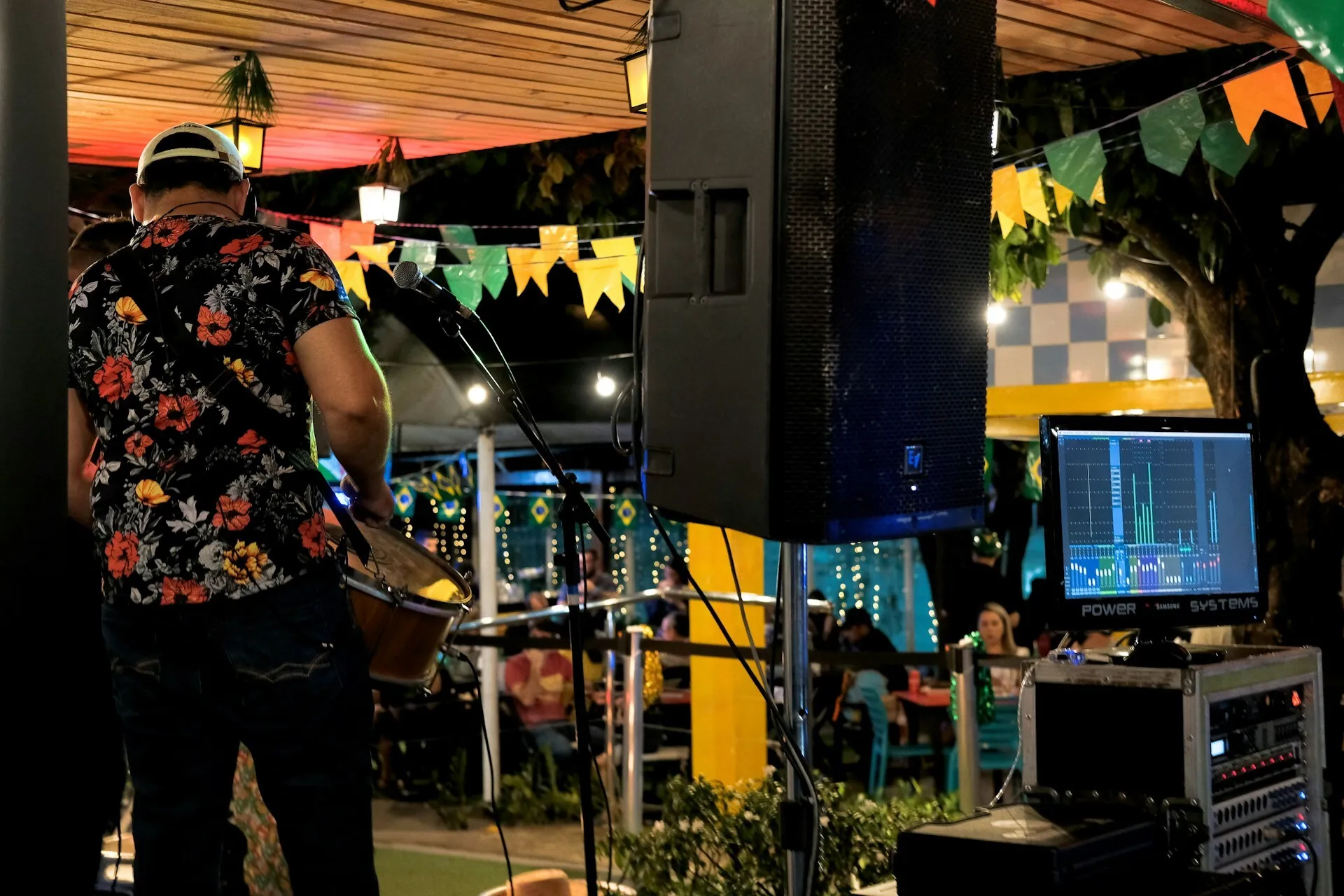
When you're hiring a PA system for an event, it's natural to focus on the speakers themselves, but where those speakers are positioned can have a significant effect on how well the audience hears them. For many event setups, speaker stands are an important part of getting that positioning right because they raise compatible PA speakers above the audience, helping sound project across the room or event area rather than being obstructed by people standing immediately in front of them. You don't need to understand acoustics or calculate the perfect speaker height yourself; the important thing is to consider the venue, audience and where the PA needs to be positioned.
Why Does Speaker Height Matter?
Imagine two professional PA speakers positioned relatively low in a crowded function room. Once guests are standing between the speakers and the rest of the audience, those people can become physical obstacles between the PA and listeners further away. Raising the speakers helps sound project across the audience instead, which can be particularly useful at events where guests will be standing, dancing or moving around for much of the time. The objective isn't simply to make the equipment taller; it's to position the speakers so they can provide more effective coverage across the area where people actually need to hear them.
Audio Hire's Speaker Tripod is designed for this purpose. The heavy-duty stand is adjustable to a maximum height of 1.8 metres and uses a tripod base and locking pin system to provide a stable platform for compatible powered PA speakers. When planning a system, the stands should therefore be considered alongside the speakers themselves rather than as an accessory that is only thought about once the rest of the booking has been completed.
Speaker Stands for Parties
Speaker stands can be particularly useful at parties where guests may be standing, talking and moving around throughout the event. A party PA begins with two professional speakers positioned to provide coverage across the main guest area, and raising those speakers can help the sound travel over the crowd rather than directing much of it into the people standing closest to the PA. This becomes increasingly important as guest numbers grow, the venue becomes larger or the audience spreads across a wider area.
If music and dancing are central to the party, the complete system may also include at least two subwoofers. The main PA speakers and subwoofers perform different jobs, so their positioning should be considered as part of the complete system rather than simply placing everything wherever space happens to be available. Depending on the venue and event, it may also be worth considering additional speakers for coverage, microphones for announcements or speeches, an audio mixer and the cables required to connect everything. You can browse Audio Hire's PA hire options to see professional systems for different types of events.
Do I Need Speaker Stands for a Wedding?
For many wedding receptions, speaker stands are well worth considering because the PA often performs several different jobs during the same event. It may provide background music while guests arrive, reproduce the MC and speeches during the formalities and then become part of a more substantial music system when the dance floor opens. During speeches, intelligibility is particularly important. You don't simply want the PA to be loud enough; you want guests throughout the room to clearly understand what is being said, and elevating the main speakers can help sound project across seated and standing guests rather than being obstructed by people closer to the speakers.
If the reception later becomes a dance-focused event, those main speakers can work with at least two professional subwoofers to provide the additional low-frequency impact required for music. This is also why it's useful to plan the sound system around the complete wedding reception rather than arranging equipment only for the speeches. Once the entire evening is considered, you may find that the system also needs additional microphones for the MC and speakers, a mixer to control the different audio sources and perhaps delivery, setup or technical assistance so the equipment is ready before guests arrive.
Speaker Stands for Corporate Events
Corporate events are another situation where speaker positioning can be particularly important. At a presentation or conference, the objective is usually clear and intelligible speech throughout the audience, and simply increasing the volume isn't necessarily the best way to achieve that. The main PA speakers should be positioned so they can distribute sound effectively across the room, and elevating compatible speakers can help provide better coverage, particularly in larger function spaces or rooms where the audience extends some distance from the presentation area.
The complete corporate audio setup may also include wired or wireless microphones, microphone stands, an audio mixer and a lectern. Audio Hire's Professional Adjustable Lectern can be a useful addition for conferences, presentations, awards nights and other formal events where speakers will present from a fixed position. Planning these components together helps create a more complete presentation setup than considering the speakers in isolation, particularly where there are several presenters, audience questions or presentation audio that also needs to be managed.
Speaker Stands for Speeches and Presentations
Speaker stands can be especially useful when speech is the primary purpose of the PA because people need to understand what is being said, not merely hear that somebody is speaking. Appropriate speaker placement helps provide more consistent coverage across the audience and can reduce the temptation to compensate for poor positioning by simply increasing the volume. This matters at weddings, conferences, awards nights, community events and other functions where a large proportion of the audience may be listening to the same speaker at the same time.
If you're arranging audio for speeches, it's also worth thinking about the complete speaking setup. Depending on the event, you may need wired or wireless microphones, microphone stands, an audio mixer and possibly additional microphones for an MC, multiple presenters or audience questions. Audio Hire's Shure PGA48 microphone is suited to speeches, MCs, presentations, conferences and announcements. Adding appropriate microphones and stands at the same time as the PA can make transitions between speakers much easier and reduce the need to move equipment around during the event.
What About Live Music?
Live performers can have more complex speaker-positioning requirements because the main PA needs to provide appropriate coverage for the audience while performers may also require monitor speakers so they can hear themselves on stage. Larger performances can introduce additional PA speakers, at least two subwoofers, several microphones and an audio mixer with sufficient inputs for the performers. Speaker stands can form part of that system where compatible main speakers need to be elevated for audience coverage.
If you're hiring equipment for live music, ask the performers for their technical requirements before finalising the booking. This allows the speakers, stands, microphones, mixer, monitors, subwoofers and cables to be considered as one complete system rather than discovering additional requirements during setup. Professional performers may already have a technical rider specifying what they need, and providing that information to Audio Hire can make it much easier to determine the appropriate equipment.
What About Outdoor Events?
Outdoor speaker positioning deserves careful thought because there are no walls and ceilings containing the sound in the same way as an indoor venue, while guests may also be spread across a considerably larger area. Raising compatible PA speakers can help project sound across the audience, but the complete coverage requirement still depends on the size and shape of the event area. For larger outdoor functions, additional speakers may be needed to extend coverage appropriately rather than trying to compensate by making the main pair excessively loud.
If music is an important part of the event, the system should also begin with at least two subwoofers, with additional low-frequency capability considered for larger audiences, dance areas and more demanding music-focused events. Outdoor events can also create longer distances between equipment and available power, so appropriate extension leads, longer audio cables and cable protection may need to be included in the setup. Telling Audio Hire that the event is outdoors and providing an indication of the size and layout of the area makes it much easier to recommend the complete system.
Where Should Speaker Stands Be Positioned?
Speaker stands should be positioned as part of the overall PA layout rather than wherever there happens to be an empty space. Think about where the audience will be, where the stage or presentation area is located and how people will move through the venue. The aim is to provide appropriate sound coverage while keeping the equipment sensibly positioned within the event space, and that means considering both the acoustic requirements and the practical realities of tables, chairs, decorations, walkways and other equipment.
Cable routing also needs to be considered when selecting speaker positions. A location may appear ideal until you realise the power or audio cables need to cross an area regularly used by guests. Where an appropriate cable route requires additional physical protection, Audio Hire offers Cable Covers and Protectors. If the preferred speaker position is further from available power, a 25m Heavy-Duty Extension Lead can provide additional flexibility. The aim is to position the PA according to the needs of the event rather than allowing the location of the nearest power outlet to dictate where everything has to go.
Remember That Speaker Stands Need Space
Speaker tripods have a wider footprint at floor level than the speaker itself, and that needs to be considered when planning the venue. At a crowded party, wedding or corporate event, tables, chairs, decorations, staging and other equipment can quickly consume the available floor space. You don't want the speaker stands squeezed into an unsuitable position simply because the PA wasn't considered until everything else had already been arranged.
Where possible, include the sound system in your venue planning from the beginning. This gives you more flexibility to position the main speakers appropriately while also allowing room for subwoofers, speaker stands and cable routes. It can also help identify whether additional speakers would provide better coverage in a particularly large or unusually shaped space, rather than trying to solve every coverage issue from the same positions.
What About Subwoofers?
Subwoofers are handled differently from the main PA speakers. The main speakers may be elevated using appropriate tripod stands, while subwoofers provide the low-frequency foundation of the music system. For a music-focused party, wedding reception or DJ event, Audio Hire starts with two main PA speakers and at least two professional subwoofers, with the system then expanded according to the venue, audience, dance-floor size and type of event.
The important thing is to think about the main speakers and subwoofers as parts of the same sound system while recognising that they perform different jobs and have different positioning requirements. If music and dancing are central to your event, browse Audio Hire's sound system hire options for more substantial speaker-and-subwoofer configurations. Larger events may also benefit from additional speakers or subwoofers, depending on the coverage and low-frequency performance required.
Should I Set Up the Speaker Stands Myself?
For a straightforward PA system, speaker stands provide a practical way to elevate compatible speakers, but professional PA speakers are substantial pieces of equipment and need to be mounted and positioned appropriately. As the complete system becomes larger, setup also becomes a more significant job. A party or wedding system involving two main PA speakers, at least two subwoofers, speaker stands, several microphones, a mixer and associated cabling requires considerably more preparation than simply placing equipment in a room.
This is where professional setup and technical assistance can become worthwhile. An Audio Hire sound technician can help position, connect and test the PA system and manage microphones, music and other audio sources throughout the event. For weddings, corporate functions, live music and larger events, this can remove a significant responsibility from the organiser while also ensuring that the system is set up and tested before the event gets underway.
Should I Add Speaker Stands to My PA Hire?
If your main PA speakers need to be elevated to provide appropriate coverage across the audience, speaker stands are an important part of the system. They're particularly useful for parties, wedding receptions, corporate events, speeches, presentations, DJs and live performances where clear sound needs to reach people throughout the venue. Audio Hire's Speaker Tripod provides a heavy-duty adjustable stand designed for professional event use.
It's also worth thinking beyond the stands themselves. Depending on the event, the complete system may benefit from additional microphones, microphone stands, at least two subwoofers, an audio mixer, longer XLR cables, extension leads, cable protection, delivery, setup or technical assistance. If you're putting together the complete system, browse Audio Hire's PA hire range or sound system hire options.
If you're unsure what the event requires, contact Audio Hire and tell us about the event type, venue, approximate guest numbers and what you're planning. You don't need to calculate speaker heights or design the PA layout yourself. We can help determine the appropriate speaker system, stands and supporting equipment for the event.
Choosing the right PA speakers matters, but positioning them properly is part of getting the best performance from the system. Speaker stands help put the sound where your audience actually needs it.