.AHLogo1200x1200Black-07578d9b18173fee3d04bf845fdf5007eba8c3c451a934328392e5221830e241.png)
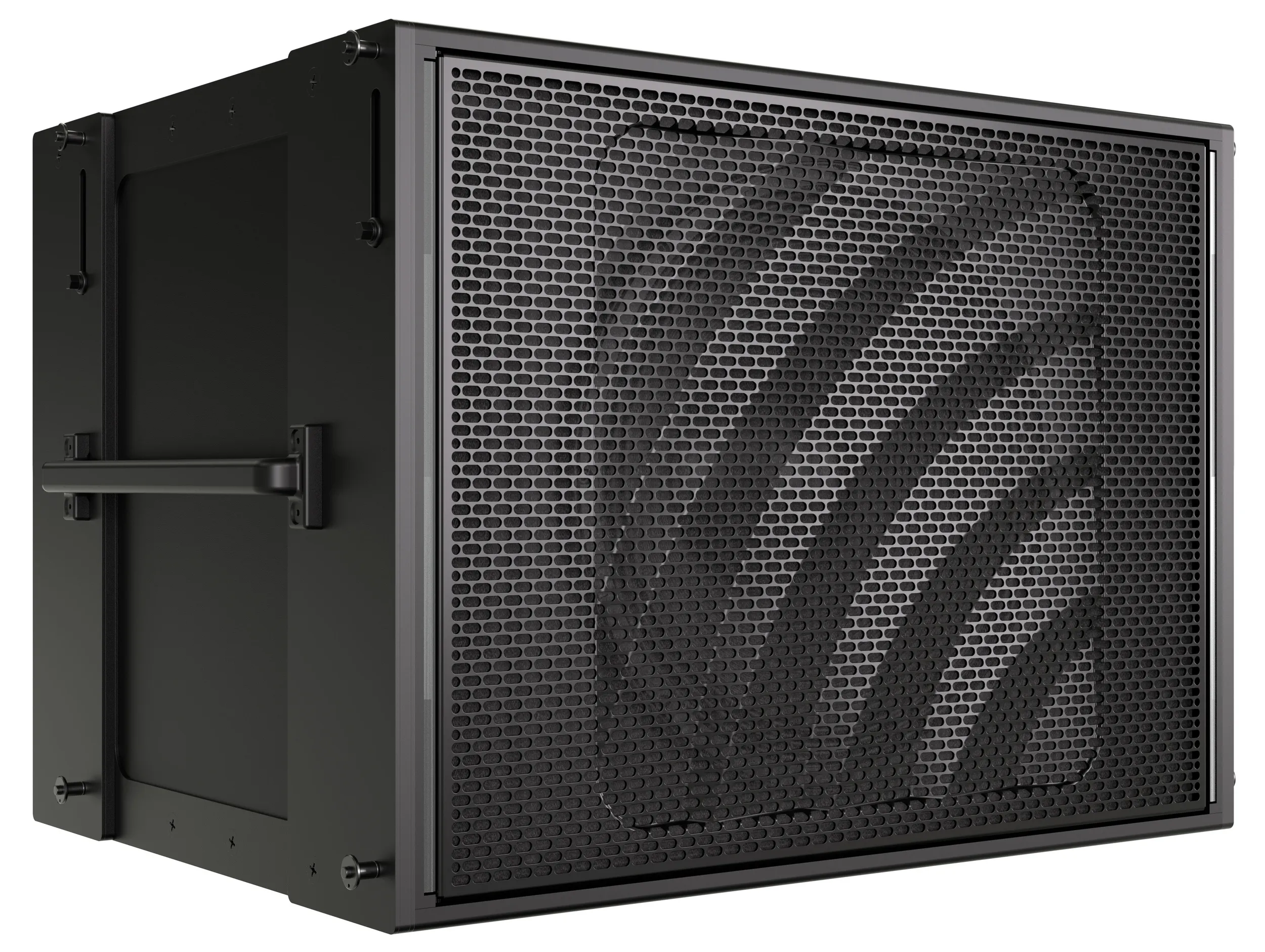
Low frequencies are among the most challenging parts of a professional sound system to reproduce and control. They contribute much of the physical weight and impact we associate with music, yet bass energy also interacts strongly with rooms, stages, walls and other boundaries. Producing more bass is relatively easy. Producing low frequencies that are powerful, consistent and appropriate for the audience is a much more demanding task.
The Meyer Sound 1800-LFC is designed specifically for this role. Introduced in 2026 alongside the Tigra line array, it is a self-powered Low-Frequency Control Element built around an 18-inch driver, integrated amplification and processing, and Meyer Sound's GEN-1 technology. Meyer Sound specifies an operating range of 30 Hz to 125 Hz and a maximum linear SPL of 134 dB measured using AES75.
Those specifications describe only part of its purpose. The more useful way to understand the 1800-LFC is as part of a complete sound system. Its job is not simply to make a system louder or produce excessive bass. It allows the low-frequency portion of the programme to be reproduced by equipment designed specifically for that task, while giving the system designer greater control over how low-frequency energy is deployed.
That distinction is particularly relevant for weddings, corporate functions, gala dinners, live performances and other professional productions where the sound system may need to reproduce very different material over the course of the occasion. Speech may require clarity and restraint, while later music can demand considerably greater low-frequency extension and dynamic capability.
What Is the Meyer Sound 1800-LFC?
Meyer Sound describes the 1800-LFC as a Low-Frequency Control Element rather than simply treating it as a conventional subwoofer. It was introduced in March 2026 as the low-frequency companion to Tigra and as part of Meyer Sound's continuing development of self-powered professional loudspeaker systems.
At its core is an 18-inch driver. The system is self-powered, meaning amplification is integrated into the enclosure and engineered as part of the complete loudspeaker rather than requiring an external amplifier to be selected and matched separately. Its specified operating range of 30 Hz to 125 Hz extends into the frequencies responsible for much of the depth, weight and physical impact we associate with amplified music.
Kick drums, bass instruments, synthesisers and electronic music can all contain substantial energy in this region. Reproducing it effectively requires more than simply increasing the level of a full-range loudspeaker. A dedicated low-frequency system allows this part of the programme to be handled by equipment specifically designed for the task, while the main loudspeakers concentrate on their own part of the frequency spectrum.
But frequency extension and output alone do not define a good low-frequency system. The system also needs to reproduce that energy cleanly and predictably. Meyer Sound's approach to the 1800-LFC reflects the fact that low-frequency reinforcement is ultimately a system-design problem rather than a competition to produce the greatest amount of bass.
This helps explain the terminology Meyer Sound uses. Calling the 1800-LFC a Low-Frequency Control Element shifts the emphasis away from the familiar idea of a subwoofer being added simply to create more bass. Instead, it encourages us to think about low frequencies as a distinct part of the sound system that needs to be deliberately designed, positioned and controlled.
Why Low-Frequency Control and Placement Matter
Low frequencies behave differently from much of the sound higher in the frequency spectrum. Their long wavelengths mean that their interaction with physical spaces can be substantial, and the position of low-frequency sources can materially affect what different members of an audience hear.
This can become obvious in an inadequately designed system. One part of a room may have overwhelming bass while another seems comparatively weak. Walking through the venue can reveal noticeable changes in low-frequency level, even though the equipment itself has not changed. Reflections and interactions with walls, floors and other boundaries can further complicate the result.
Simply adding more output does not solve these problems. Professional low-frequency system design instead considers where the audience is located, the physical characteristics of the venue, where the low-frequency elements can be positioned and how multiple elements will interact acoustically.
When multiple low-frequency sources reproduce the same material, the sound waves they create interact. Depending on their relative positions, timing and the listener's location, those interactions can reinforce acoustic energy in some areas and reduce it in others. Two systems using identical equipment can therefore behave very differently when their low-frequency elements are arranged differently.
This is one reason placement matters so much. The objective is not maximum bass everywhere. It is useful and appropriately controlled low-frequency coverage across the area where it is required. For Audio Hire, a Meyer Sound system requiring dedicated low-frequency reinforcement starts with at least two low-frequency elements. Their positioning and configuration are then considered as part of the complete system rather than simply finding somewhere convenient to put them.
The 1800-LFC supports different approaches to professional deployment. Depending on the requirements of the system, low-frequency elements can be incorporated into configurations designed around the venue, audience and main loudspeaker system. Multiple elements also provide opportunities for more deliberate directional control of low-frequency energy, including techniques such as cardioid bass configurations.
These principles become particularly important in venues where bass needs to be controlled rather than merely generated. A ballroom, wedding venue, theatre or outdoor production can present very different acoustic and physical constraints. Available floor space, staging, audience layout, sightlines and room boundaries can all influence the appropriate solution.
The number of low-frequency elements is therefore only one part of the equation. Position, spacing, timing, audience geometry and the relationship with the main loudspeaker system all matter. More equipment without appropriate system design does not automatically produce better sound.
Self-Powered Design, GEN-1 and Integration with Tigra
Like Tigra, the 1800-LFC follows Meyer Sound's self-powered design philosophy. Amplification, the driver, processing and protection are engineered as components of the same loudspeaker system rather than assembling a loudspeaker and external amplifier as unrelated pieces of equipment.
This integrated approach is important in professional sound reinforcement because it gives the manufacturer control over the relationship between the amplifier, processing and transducer. When multiple loudspeakers are used as part of a larger system, predictable behaviour and consistency between elements become particularly valuable.
The 1800-LFC extends this integration through Meyer Sound's GEN-1 technology. GEN-1 brings digital signal processing, control and networked-audio capability into the loudspeaker while retaining conventional analogue connectivity. The 1800-LFC supports Milan, AES67 and analogue connections, allowing it to operate within different professional audio architectures according to the needs of the production.
This is more significant than simply adding additional connectors to the back of the enclosure. In a traditional system, substantial processing and signal-management functions may depend on equipment elsewhere in the signal chain. GEN-1 moves more of that capability into the loudspeaker itself and incorporates processing derived from Meyer Sound's Galileo GALAXY platform. Meyer Sound's Nebra software can also form part of the system calibration and monitoring workflow.
For the audience, none of this should demand attention. Someone listening to wedding speeches should not need to know how the low-frequency system is connected. Guests at a gala dinner should not need to understand networked audio. The purpose of the technology is to give the people designing and operating the system greater control over what the audience ultimately hears.
The relationship between the 1800-LFC and Tigra demonstrates this integrated approach particularly well. Tigra can provide the principal audience coverage through its line-array configuration, while the 1800-LFC concentrates on the lowest part of the system's operating range. The system designer can therefore consider main coverage and low-frequency reinforcement as distinct but interconnected parts of the same acoustic design.
This becomes particularly useful when the programme changes significantly during a function. A wedding reception might begin with background music before moving through introductions, speeches and formalities. During those parts of the evening, vocal intelligibility and appropriate overall level are priorities. When the dance floor opens, kick drums, bass lines and electronic music can introduce dramatically different low-frequency requirements.
A corporate production can undergo a similar transformation. A keynote presentation, panel discussion or awards ceremony may be followed by video content, live entertainment or a DJ. A properly designed system can accommodate these changing requirements without treating every part of the programme as though it needs the same amount of low-frequency energy.
For a detailed explanation of the main line-array component, read Meyer Sound Tigra: A Complete Guide to the Professional Line Array.
What the 1800-LFC Means in Real-World Applications
Technical specifications become most useful when they are connected to practical listening requirements. The 1800-LFC's 30 Hz to 125 Hz operating range covers the region responsible for much of the weight, depth and impact in amplified music. Its specified 134 dB AES75 maximum linear SPL indicates substantial low-frequency capability, but maximum output should never be confused with an appropriate audience listening level.
A professional sound system benefits from having sufficient capability to reproduce dynamic programme material without continually operating at its limits. This available margin contributes to headroom. Low-frequency musical content can be extremely dynamic and a kick-drum transient or sudden bass note can require considerably more instantaneous output than the average programme level might suggest. Adequate system capability allows those moments to be reproduced without the low-frequency system sounding strained.
At the same time, good low-frequency reproduction requires restraint. A corporate dinner does not become more professional because glasses are vibrating on the tables. A wedding reception does not benefit from excessive bass during speeches. A live performance is not improved when low-frequency energy overwhelms vocals and other musical detail. The objective is to have the capability available when the programme requires it and the control to use it appropriately.
At weddings, the greatest low-frequency demand will often occur during the entertainment portion of the reception. Speeches and background music may require comparatively restrained reinforcement, while the dance floor can call for substantially greater extension and impact. A professionally operated system allows those changes to be managed throughout the occasion rather than treating the reception as a fixed-volume environment.
Corporate functions can be equally varied. Conferences and presentations are primarily concerned with intelligibility, but product launches, awards nights, gala dinners and end-of-year celebrations can incorporate music, video playback, DJs or live performers. The sound system may therefore need precision during formal proceedings and substantially greater dynamic capability later.
Live music presents another set of demands. Kick drums and bass instruments need weight and definition, but low-frequency reinforcement should support the mix rather than dominate it. The relationship between the 1800-LFC system and the main loudspeakers therefore becomes just as important as the capability of the low-frequency elements themselves.
Outdoor productions introduce different considerations again. Without the same room boundaries found indoors, low-frequency energy behaves differently and can travel considerable distances. System placement, scale and directional control can consequently become particularly important when designing sound for the intended audience while considering the surrounding environment.
In each case, the equipment follows the requirement. Having substantial low-frequency capability does not mean using all of that capability continuously. It means having sufficient headroom and control to reproduce the programme appropriately when those demands arise.
Low Frequencies Should Support the Experience
There is a tendency to judge low-frequency systems according to how physically impressive they are. Impact certainly matters for dance music, live performance and other applications where low-frequency energy is an important part of the programme, but impact without control can quickly become tiring.
Good low-frequency reinforcement should feel connected to the rest of the sound system. A kick drum should have weight without becoming an indistinct thump. Bass instruments should have depth while remaining musically defined. Electronic music should have physical impact without making the rest of the mix disappear. When speech is the priority, intelligibility should remain central.
Achieving that result depends on more than the 1800-LFC itself. The relationship between the low-frequency elements and the main loudspeaker system needs to be considered alongside placement, level, timing, venue acoustics, audience layout and programme material.
This is why Audio Hire provides Meyer Sound as a professionally designed and operated service. The 1800-LFC is not treated as an isolated piece of equipment that is simply added to a booking. Its role is considered as part of the complete sound system and in relation to what the production actually needs to achieve.
Meyer Sound's engineering provides considerable capability, but the final result still depends on applying that capability appropriately. The 1800-LFC is best understood not simply as a source of powerful bass, but as a professional tool for extending and controlling the low-frequency performance of a complete sound reinforcement system.
For a broader introduction to the principles behind these systems, read Meyer Sound Speaker Systems: An Introduction to Professional Sound Reinforcement.
For more detail on the main loudspeaker system, read Meyer Sound Tigra: A Complete Guide to the Professional Line Array.
To discuss a professionally designed Meyer Sound system for a wedding, corporate function or other production in Adelaide, visit Meyer Sound Hire Adelaide.