.AHLogo1200x1200Black-07578d9b18173fee3d04bf845fdf5007eba8c3c451a934328392e5221830e241.png)
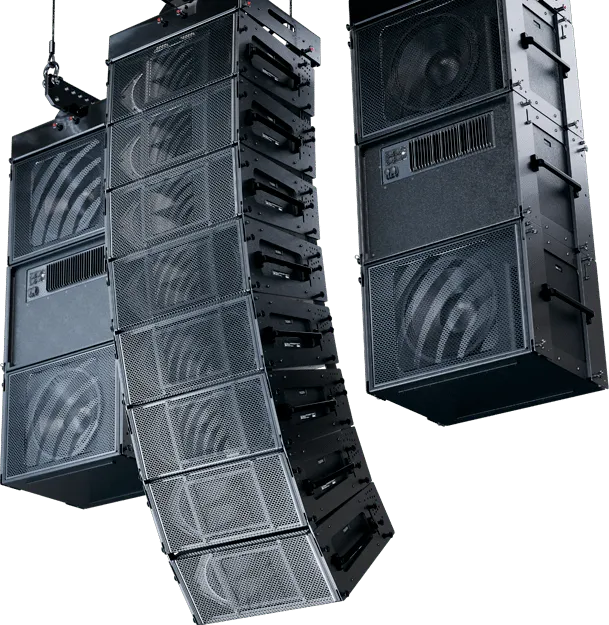
Choosing a professional loudspeaker is only one part of designing a sound system. Where the loudspeakers are positioned, how they are configured and how their coverage relates to the audience can have just as much influence on the result as the equipment itself. This is particularly important with a line-array system such as Meyer Sound Tigra, where multiple loudspeaker elements can be configured to work together around the shape and depth of the listening area.
Tigra is available in two models with different horizontal coverage characteristics. Tigra-L provides 85-degree horizontal dispersion, while Tigra-W provides 110-degree horizontal dispersion. Both share the same 55 Hz to 16 kHz linear frequency response, but their different horizontal patterns give the system designer options when determining how sound should be distributed across an audience.
Those numbers are useful, but they do not tell us how a complete Tigra system should be configured. Professional coverage design involves the relationship between loudspeaker position, array height, individual element angles, audience geometry and the acoustic characteristics of the space. Meyer Sound's system-design approach uses prediction tools to help determine factors such as array position, the number and type of Tigra elements, trim height and the splay angles between cabinets.
Understanding these principles helps explain why professional sound reinforcement is not simply a matter of choosing powerful loudspeakers and pointing them towards an audience. The system needs to be designed around the people who will actually be listening.
Sound Coverage Starts With the Audience
A useful sound-system design begins with a straightforward question: where are the people who need to hear it? Consider a corporate dinner in a long ballroom. Some guests may be relatively close to the stage while others are seated much farther away. The audience may also extend significantly across the width of the room. A wedding reception can present similar challenges, particularly when tables, a dance floor, staging and other production elements divide the room into different listening areas.
Trying to solve these problems simply by increasing loudspeaker level can produce an unsatisfactory result. People close to the system may experience excessive volume while those farther away still receive less direct sound. More acoustic energy can also be directed towards ceilings, walls and other reflective surfaces, potentially reducing clarity. Coverage design approaches the problem differently. The objective is to direct useful acoustic energy towards the areas occupied by the audience and achieve an appropriate relationship between different parts of the listening area.
Tigra's line-array format gives the system designer several variables with which to work. The position and height of the array matter, as do the angles between individual loudspeaker elements. The choice between Tigra-L and Tigra-W affects horizontal coverage, while the number of elements and the overall array geometry influence how the system addresses the audience vertically. This is why the physical configuration of a professional line array is part of the acoustic design rather than merely a way of mounting several loudspeakers together.
The distinction between Tigra-L and Tigra-W is particularly useful. Tigra-L has an 85-degree horizontal dispersion pattern, while Tigra-W provides a wider 110-degree pattern. A narrower horizontal pattern can be useful when acoustic energy needs to be concentrated within a more defined area, while a wider pattern can help address an audience extending farther across the room. Neither is inherently better. Their usefulness depends on the geometry of the listening area and the role each element performs within the complete system.
A Tigra array also does not necessarily need to be thought of as a collection of identical elements performing identical jobs. Meyer Sound's system-design approach allows the location and type of Tigra elements within an array to form part of the overall design. This is valuable because audiences rarely occupy perfectly rectangular listening areas. Different portions of an audience can be located at different distances and angles from the system, creating different coverage requirements.
For someone organising a wedding, conference, awards night or other production, the practical lesson is important: specifying the loudspeaker model alone does not specify the sound system. Two systems using Tigra can be configured quite differently because the rooms, audiences and programme requirements are different.
Array Geometry, Position and Deployment
When multiple Tigra elements form an array, the angles between individual cabinets help determine how the system distributes sound vertically. These are commonly referred to as splay angles. They become particularly important because listeners are rarely positioned at the same distance or angle from an array.
Imagine looking at an audience from the side. People close to the stage may be positioned relatively steeply below a flown array, while listeners at the back of the room are much farther away and may lie closer to the horizontal axis of the system. The loudspeaker array therefore needs to address a listening area that changes in both distance and angle. The geometry of the array can be designed around that audience rather than simply aiming every element in the same direction.
Meyer Sound's system-design process uses MAPP 3D prediction to evaluate factors including array position, the number of loudspeakers, Tigra model selection, trim height and the splay angles between cabinets. These decisions can therefore be considered before the physical system is assembled. Prediction allows the designer to examine how proposed configurations relate to the intended listening area and refine the design before deployment.
Changing the height of an array changes its geometric relationship with the audience. Changing the angles between elements changes the way different parts of the array address the listening area. Changing the number or type of elements can alter available coverage and capability. These variables interact, which is why professional array design considers them together rather than treating each as an isolated decision.
Tigra has also been designed to support different deployment approaches. Depending on the application and appropriate professional rigging, systems can be flown or ground-stacked. A flown system can provide useful advantages when suitable infrastructure and production conditions are available. Raising an array changes its relationship with the audience and can help address a listening area from above while keeping equipment away from floor-level space and sightlines.
Ground-stacked deployment can be appropriate where flying is unnecessary, unavailable or unsuitable. It can provide a practical approach for productions where the room, audience and system requirements do not justify a flown configuration. Neither method should be considered automatically superior. The appropriate approach depends on the venue, audience, stage, available infrastructure, sightlines and acoustic objectives.
These considerations are particularly relevant for weddings and corporate functions because venues can differ enormously even when their capacities are similar. A hotel ballroom, heritage venue, modern function centre and outdoor setting can accommodate comparable audiences while presenting very different acoustic and physical constraints. A sound system designed appropriately for one should not simply be transplanted into another without reconsidering its configuration.
Physical presentation matters as well. Corporate productions may incorporate projection screens, LED displays, staging and branding that require clear sightlines. Wedding styling, floral installations, tables and dance floors can influence where technical equipment can sensibly be positioned. Good system design considers these practical requirements alongside the acoustic ones.
Prediction and Professional System Design
One of the significant advantages available in professional line-array design is the ability to predict system behaviour before the loudspeakers are physically deployed. Meyer Sound's MAPP 3D software provides acoustic prediction tools that allow proposed loudspeaker configurations to be examined in relation to the listening area.
For Tigra, this means that decisions about array position, loudspeaker quantity, Tigra-L and Tigra-W selection, trim height and splay angles can form part of a deliberate design process. Rather than arriving at a venue and simply placing loudspeakers where space happens to be available, the system can be considered in relation to the audience and production requirements beforehand.
Prediction does not eliminate professional judgement. Instead, it provides better information with which to exercise it. The venue still needs to be understood, audience areas need to be identified correctly, practical restrictions need to be considered and the programme requirements need to be known. Once the system is deployed, it still needs to be checked, optimised and operated appropriately.
This is also why simply adding more loudspeakers does not necessarily improve a system. Additional elements change the acoustic and physical characteristics of an array and should serve a purpose within the design. A smaller, appropriately configured system can be preferable to a larger system that has not been designed around the audience. The objective is not to maximise the amount of equipment in the room but to use appropriate equipment in an appropriate configuration.
The same principle extends to low-frequency reinforcement. Where dedicated low-frequency reproduction is required, the relationship between Tigra and the low-frequency system needs to be considered as part of the complete design. Audio Hire's approach starts with at least two low-frequency elements, with their positioning and configuration determined by the production rather than treating them as an afterthought.
For a deeper explanation of this part of the system, read Meyer Sound 1800-LFC: A Complete Guide to Low-Frequency Control.
Designing Tigra Around the Room, Audience and Programme
Tigra's technical capabilities are valuable because they provide options. Tigra-L and Tigra-W offer different horizontal coverage patterns. Multiple elements can be configured into arrays. Systems can be flown or ground-stacked where appropriate. Array position, height and element angles can be designed around the audience, while Meyer Sound's prediction tools allow many of those decisions to be evaluated before deployment.
That flexibility also means there is no single Tigra configuration that is correct for every production. A wedding reception for 150 guests in a wide room presents a different problem from a corporate presentation for the same number of people in a long ballroom. A gala dinner with staging and large video screens presents different physical constraints again. Live music or a dance floor changes the programme requirements, while an outdoor audience introduces another set of coverage considerations.
Even within one function, the listening requirements can change. During wedding speeches, the priority may be clear and natural vocal reproduction throughout the seated audience. Later in the evening, the focus may shift towards a dance floor. At a corporate function, the programme might move from keynote presentations and awards to entertainment. The sound system therefore needs to be considered in relation to the entire production rather than a single moment within it.
This is one reason coverage should not be confused with loudness. A powerful loudspeaker system does not automatically provide good coverage, and increasing level cannot compensate for a system that is poorly directed towards its audience. Good coverage is about delivering useful sound where people need to hear it while avoiding unnecessary acoustic energy where possible.
Professional sound-system design is therefore an exercise in matching the equipment to the space, audience and programme. The loudspeaker model matters, but so do its location, orientation, array geometry, deployment and operation. These elements work together to determine what the audience ultimately hears.
That is why Audio Hire provides Meyer Sound as a professionally designed and operated service. The value of a system such as Tigra lies not simply in supplying sophisticated loudspeakers, but in determining how those loudspeakers should be configured and operated for the particular production.
For a broader introduction to Tigra itself, read Meyer Sound Tigra: A Complete Guide to the Professional Line Array.
For the wider principles behind Meyer Sound professional systems, read Meyer Sound Speaker Systems: An Introduction to Professional Sound Reinforcement.
To discuss a professionally designed Meyer Sound system for a wedding, corporate function or other production in Adelaide, visit Meyer Sound Hire Adelaide.