.AHLogo1200x1200Black-07578d9b18173fee3d04bf845fdf5007eba8c3c451a934328392e5221830e241.png)
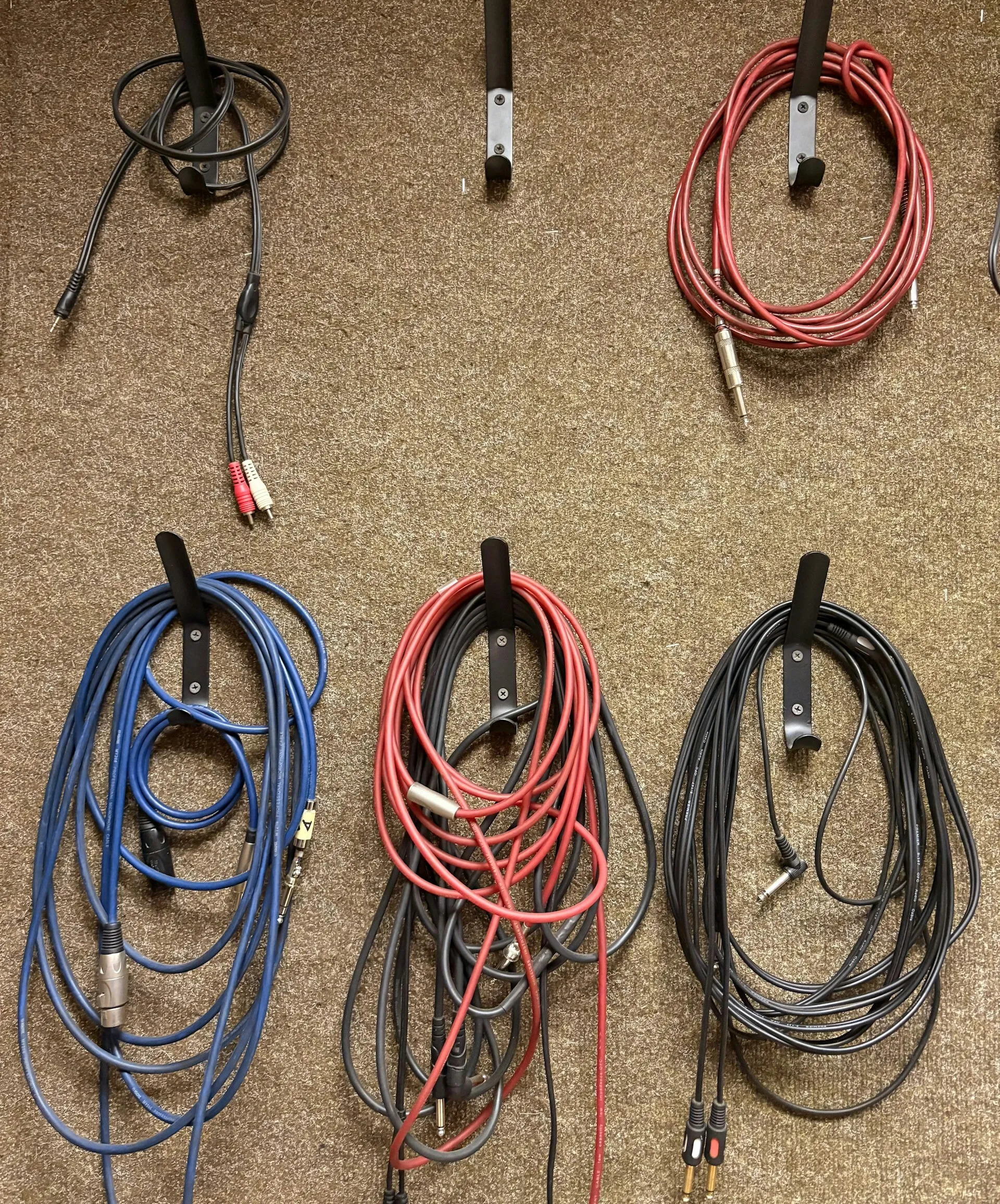
Cables are easy to overlook when planning event sound because speakers, microphones and mixers attract most of the attention. In practice, though, the system only works if the equipment can actually connect to the places where it needs to be used.
The right cables depend on the physical layout of the venue as much as the equipment itself. A compact presentation with the mixer, microphones and speakers close together may only need standard cable lengths, while a wedding, conference, live performance or outdoor event can place equipment much further apart.
The best approach is to decide where the main equipment needs to be positioned first, then work out what cable lengths and connections are required. Audio Hire includes the standard cables required for compatible speaker systems, with longer audio cables, extension leads and cable protection available where the venue layout demands more flexibility.
Start With the Layout
Before thinking about connector types, picture the event space.
Where will the main pair of speakers sit? Where will the mixer or DJ equipment be positioned? Where will people use microphones? Where are the nearest suitable power outlets? Will any cables need to travel across areas used by guests, staff or performers?
Those questions usually tell you far more than starting with a list of cable specifications.
A wedding reception might have speakers and subwoofers around the dance floor while the DJ or mixer sits somewhere else. A corporate presentation can place presenters at the front of a room and the operator much further back. Live music can spread microphones, instruments and other equipment across a stage while the mixer sits in a separate position.
Once the physical layout is clear, the cable requirements become much easier to determine.
XLR Cables
XLR is one of the most common professional audio connections used in live sound.
XLR cables are widely used for microphones and can also carry balanced audio signals between mixers, powered speakers and other professional audio equipment. If you are hiring a wired microphone, an XLR cable will usually form part of that signal path.
For short and medium distances, standard cable lengths are often sufficient. In larger venues or more spread-out setups, longer runs may be needed so the equipment can remain in sensible positions rather than being moved simply because a shorter cable will not reach.
Audio Hire also provides a 50m XLR Cable Hire Adelaide option for situations where microphones, mixers and other compatible equipment need to be separated by a greater distance. This can be useful at weddings, conferences, live performances and larger events where the mixer or operating position needs to sit well away from the stage or speakers.
If you are using microphones, you can also browse Microphone Hire Adelaide.
Audio Cables and Speaker Systems
Not every cable in a sound system performs the same job.
Professional powered speakers, such as the Electro-Voice systems used by Audio Hire, contain their amplifiers inside the cabinets. They therefore need both mains power and an audio signal. The signal commonly comes from a mixer, DJ controller or another suitable audio source.
The standard cables required to connect booked Audio Hire speaker systems are included where applicable. Longer cables can then be added when the layout requires extra reach.
If you are building a larger system from several components, see PA Hire Adelaide or Sound System Hire Adelaide.
Extension Leads and Power
Audio cables carry audio signals. They do not replace power cables or electrical extension leads.
Powered speakers, mixers and other equipment still need suitable mains power. The challenge is that the nearest power outlet is not always where the equipment needs to sit.
A speaker might need to be positioned on one side of a presentation area while the nearest outlet is much further away. A mixer may need to sit at the rear of the room rather than next to a wall socket. Outdoor events and large venues can create even greater distances.
Audio Hire offers Extension Lead Hire Adelaide using a 25-metre heavy-duty cable reel with multiple outlets. This provides useful flexibility where compatible equipment needs to be positioned away from available power. The reel must still be used within its rated electrical capacity and according to its operating requirements.
Power availability should be considered at the same time as speaker and mixer positions rather than being treated as an afterthought.
Cable Covers and Walkways
Sometimes the most important cable decision is not what connector is required, but where the cable has to travel.
Whenever power, audio or data cables need to cross areas where people will walk, leaving them exposed can create an unnecessary trip hazard and can also leave the cables vulnerable to being stepped on or damaged.
Where appropriate, Cable Cover Hire Adelaide can provide physical protection over temporary cable runs. Audio Hire’s cable protectors can be used as part of event setups where cables need to cross suitable walkways or other traffic areas.
Cable covers should still be used as part of sensible cable planning rather than as an excuse to route cables anywhere. Where possible, cables should run around the edges of rooms, behind equipment or through areas with limited pedestrian traffic.
Microphones and Longer Cable Runs
Wired microphones are a common reason additional cable length is required.
A microphone may need to be positioned on a stage while the mixer sits at the rear of the venue. A wedding speech position might be some distance from the person controlling the sound. A live performer may also need greater freedom around a stage.
In those cases, a longer XLR run can allow the microphone and mixer to remain in the locations that make sense for the event rather than forcing the equipment closer together.
For situations where movement is more important than a fixed cable run, a wireless microphone may be more appropriate. Our guide to wired vs wireless microphones explains that decision in more detail.
Mixers and Cable Requirements
Mixers often sit at the centre of the audio system, so their position affects several cable runs at once.
A small mixer positioned close to the speakers may only require relatively short connections. At a conference or live performance, the mixer might instead sit well away from the stage so the operator can hear what the audience is hearing.
That can require longer microphone and line-level cable runs between the stage, mixer and speakers.
The best mixer position should usually be chosen for practical operation first, then supported with the appropriate cables. Moving the mixer to an unsuitable location simply because a cable is too short can compromise the entire setup.
If several microphones and playback sources are involved, PA Hire Adelaide provides a broader overview of complete systems.
Weddings, Corporate Events and Live Music
Different types of events create different cable requirements.
At a wedding, the ceremony and reception may take place in separate locations, while speeches, music and DJ equipment can all require different connections throughout the day. For complete wedding planning, see Wedding Sound Hire Adelaide.
Corporate events and conferences can involve microphones at the front of the room, laptop playback, presentation audio and a mixer positioned well away from the stage. These arrangements often make longer audio runs particularly useful. For complete business-event solutions, visit Corporate AV Hire Adelaide or Conference AV Hire Adelaide.
Live music can involve still more connections, with microphones, instruments and other sources distributed around the stage. In these applications, cable planning becomes part of the complete system design rather than simply an accessory decision.
Outdoor Events
Outdoor setups need particularly careful cable planning because the distances between equipment and power sources can become much greater.
Speakers may need to cover a large audience area while the mixer sits elsewhere, and suitable mains power may not be available exactly where the equipment needs to go. Longer XLR cables and extension leads can provide useful flexibility, but cable routes must still be kept organised and protected from inappropriate exposure to weather or pedestrian traffic.
Our guide to what sound system you need for an outdoor event explains outdoor layout considerations in more detail.
Should You Set Everything Up Yourself?
For a straightforward two-speaker system, the supplied connections may be relatively simple if you are comfortable following the setup instructions.
As the system becomes larger, there are more cable runs to plan and more connections to make. A wedding with a main speaker system, at least two subwoofers, several microphones, a mixer and DJ equipment can involve a substantial amount of cabling. A conference with multiple microphones and a separate mixing position can involve long signal runs, while live music introduces still more connections.
At that point, professional setup can become useful not because the cables themselves are complicated, but because the complete system needs to be positioned, connected and tested as one installation.
Audio Hire provides Sound System Setup Adelaide, which can include delivery, speaker placement, connections and testing. For events where microphones, playback and system levels need active management throughout the programme, Sound Technician Hire Adelaide is also available.
So, What Cables Do You Actually Need?
You do not need to know every connector type or calculate exact cable lengths before contacting Audio Hire.
Start with the venue layout. Work out approximately where the speakers, mixer, microphones, DJ equipment and other sources need to sit, then identify where suitable power is available and whether any cable routes need to cross areas used by people.
A compact setup may only require the standard cables supplied with the booked equipment. A larger venue might require a 50m XLR cable, a 25m extension lead and cable covers where appropriate routes need additional protection.
If you are putting together the complete system, browse PA Hire Adelaide, Sound System Hire Adelaide or Microphone Hire Adelaide.
Tell Audio Hire what you are organising, how the venue is laid out and where the equipment needs to go. We can then help determine the cables, power extensions and cable protection required to connect the system properly.