.AHLogo1200x1200Black-07578d9b18173fee3d04bf845fdf5007eba8c3c451a934328392e5221830e241.png)
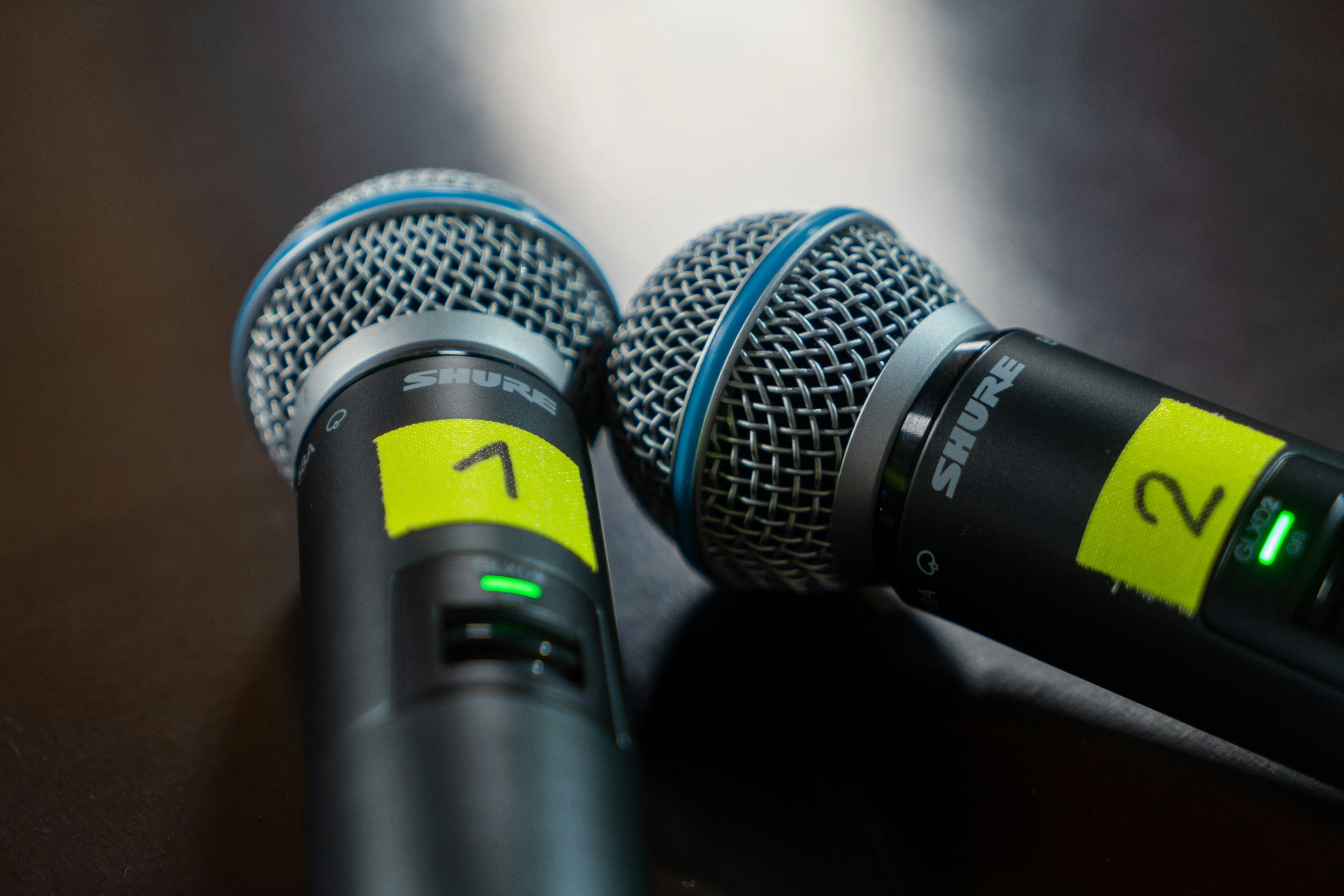
Wireless microphones are useful whenever a speaker, presenter, celebrant or MC needs to move freely without being connected to the sound system by a microphone cable. Instead of sending the microphone signal through an XLR cable, a wireless system transmits the audio by radio to a receiver, which then connects to the mixer or PA system. The principle is straightforward, but a wireless microphone is actually a system made up of several parts, and understanding those parts makes it much easier to choose the right microphone, set it up correctly and understand what is happening if something does not work as expected.
What Is a Wireless Microphone?
A wireless microphone captures sound in the same basic way as a wired microphone. The difference is how that signal gets from the person speaking to the rest of the sound system. With a wired microphone, the audio travels through a physical cable. With a wireless microphone, the audio is converted into a radio signal and transmitted through the air to a receiver. The receiver converts that transmission back into an audio signal that can be sent into a mixer or directly into a suitable PA input. The basic signal path is therefore microphone → transmitter → radio signal → receiver → mixer or PA → speakers.
The transmitter is the part of the system carried or worn by the person using the microphone. With a handheld wireless microphone, the transmitter is normally built into the body of the microphone itself, so from the user's point of view it looks much like a conventional handheld microphone without a cable attached. Lapel and headset microphones work slightly differently because the microphone connects to a small bodypack transmitter worn on the person's clothing or belt. The bodypack handles the radio transmission while the microphone itself remains positioned on the clothing or close to the mouth.
The receiver is the other half of the wireless connection. It remains with the sound equipment and listens for the signal being transmitted by the microphone. Once it receives that signal, it converts it back into usable audio and sends it onwards through an output connection. That output may go into an audio mixer, a powered speaker or another part of the PA system depending on how the system is configured. This is an important distinction because the microphone does not normally transmit directly to the PA speaker. The wireless link only replaces the cable between the person using the microphone and the receiver. From the receiver onwards, the signal continues through the sound system in much the same way as any other audio source.
How Do Wireless Microphones Connect and Work Together?
The transmitter and receiver need to operate on compatible radio frequencies. In a simple system, both are set to the same corresponding channel or frequency so the receiver knows which transmission it should receive. When several wireless microphones are operating at the same time, each one needs an appropriate channel, and this is where frequency coordination becomes more important because the systems need to operate alongside one another without interfering with each other.
This is one reason multi-microphone wireless systems should be configured as a complete system rather than treated as a random collection of independent microphones. As the number of active channels increases, the way those frequencies are selected becomes increasingly important. A properly configured system allows several presenters or performers to use wireless microphones at the same time without the receivers competing for the same transmission.
Once the receiver has converted the radio signal back into audio, that signal needs to reach the PA. For a very simple setup, the receiver may connect directly to a suitable input on a powered speaker. Where more control is needed, the receiver connects to a mixer first. Using a mixer is particularly useful when several microphones or other audio sources are involved because each microphone can have its own channel, allowing individual levels to be adjusted independently before the combined signal is sent to the speakers. For speeches and presentations, a common signal path is therefore wireless microphone → receiver → mixer → powered PA speakers.
Why Use a Wireless Microphone for Speeches?
The main advantage of a wireless microphone is freedom of movement. A speaker can move around a room, step away from a lectern or interact with the audience without dragging a microphone cable behind them. That can be especially useful for MCs, celebrants, presenters and people conducting audience Q&A, and it can also reduce the amount of loose microphone cabling around the speaking area.
Wireless is not automatically better than wired, however. If a person will remain at a fixed lectern or microphone stand, a wired microphone can be extremely simple and reliable. The choice should depend on how the microphone will actually be used. For some functions, the freedom of movement is a major advantage; for others, the simplicity of a wired microphone may be more appropriate.
The type of wireless microphone also matters. A wireless handheld microphone is familiar and easy to pass between people, which makes it useful for speeches, MCs, audience Q&A and general-purpose use. A lapel microphone clips to the user's clothing and connects to a bodypack transmitter, leaving both hands free and providing a discreet appearance for presentations, interviews, ceremonies and conferences. A headset microphone also connects to a bodypack, but positions the microphone close to the user's mouth, which gives a more consistent microphone position and can make it easier to achieve useful voice level before feedback becomes a problem.
Can Several Wireless Microphones Be Used at Once?
Yes, provided the system has enough compatible wireless channels and they are configured correctly. This is common for conferences, panel discussions and presentations involving several speakers. Each presenter can have their own microphone, and the receiver outputs can be fed into separate mixer channels so that each person can be controlled independently.
This becomes particularly useful when different speakers have very different voice levels. One presenter may speak loudly and confidently while another speaks much more quietly. Separate mixer channels allow those differences to be managed without changing the entire PA system. Audio Hire offers multi-channel wireless lapel and headset systems in 2, 4 and 8 microphone configurations for applications where several presenters need hands-free microphones at the same time.
Batteries, Range and Reliability
The transmitter needs its own power because it is actively sending a radio signal. Depending on the system, this may come from replaceable batteries or a rechargeable battery pack. Battery condition should always be checked before the microphone is required, particularly for ceremonies, conferences and presentations where an interruption would be disruptive. The receiver also needs power, although conventional receiver units are normally powered from mains electricity.
There is no single operating distance that applies to every wireless microphone. Range depends on the wireless system, antenna design, frequency band, surrounding radio activity and the physical environment. Walls, structures and other obstacles can affect the signal, while a relatively clear path between the transmitter and receiver generally provides more favourable conditions. Manufacturer range figures can be useful, but they should not be treated as a guarantee that the same distance will be achieved in every venue. For most speeches, presentations and ceremonies, sensible receiver placement matters more than trying to achieve the maximum possible range.
Wireless Microphones and Feedback
Wireless technology itself does not cause feedback. Feedback occurs when sound from the PA speakers is picked up by the microphone, amplified and sent back through the speakers again. A wireless microphone can therefore feed back for the same reason as a wired microphone. Speaker placement, microphone position, gain settings and the way the microphone is used all affect how much level can be achieved before feedback begins.
Lapel microphones can be more challenging in this respect because they are usually positioned further from the person's mouth and may require more gain. Headset microphones keep the capsule closer to the voice, which can provide an advantage when higher speech levels are required. Handheld microphones also benefit from being used close to the mouth rather than held too far away, because a stronger direct voice signal means less gain is required from the system.
Do You Need a Mixer With a Wireless Microphone?
Not always. A single wireless microphone may be able to connect directly to a suitable powered speaker input. A mixer becomes more useful when there are several microphones, music sources or other devices to control because it gives you independent control over each source and provides one place to balance everything before the audio is sent to the PA.
For conferences and multi-presenter functions, a mixer is particularly useful because different people can speak at very different levels. Individual channels allow those differences to be managed without affecting every microphone in the system. A mixer also makes it easier to reduce or mute microphones that are not currently being used, which can help keep the overall system cleaner and easier to control.
Wireless Microphones for Weddings and Corporate Events
Wireless microphones are especially useful at weddings because several different people may need to speak in different parts of the venue. A celebrant may need a hands-free microphone during the ceremony, while an MC or guest may use a handheld microphone for speeches at the reception. Outdoor ceremonies can also benefit from wireless systems because long microphone cables may be inconvenient or impractical. The PA still needs to be positioned and configured correctly, but the wireless link gives the person speaking much more freedom.
Corporate functions often involve more microphones than people initially expect. There may be a presenter, MC, panel members and audience Q&A, all requiring different forms of microphone access. A wireless handheld microphone works well for roving Q&A or presenters who prefer to hold the microphone, while lapel and headset systems are better suited to presenters who need both hands free. For more complex conferences, the microphone system should be considered alongside the mixer, speaker coverage and whether a sound technician is needed to manage levels and cues throughout the programme.
Wireless Microphone Hire in Adelaide
Audio Hire supplies wireless microphones for speeches, weddings, presentations, conferences, ceremonies and other functions around Adelaide. Options include wireless handheld systems as well as multi-channel lapel and headset systems where several speakers need hands-free microphones.
The right choice depends on how many people will be speaking, whether they need to move around, whether they need their hands free and what PA equipment is already available. If you are unsure which wireless microphone system is appropriate, tell us how the microphone will be used and how many people need to speak. We can recommend the appropriate microphone and PA setup rather than expecting you to work it out from technical specifications alone.