.AHLogo1200x1200Black-07578d9b18173fee3d04bf845fdf5007eba8c3c451a934328392e5221830e241.png)
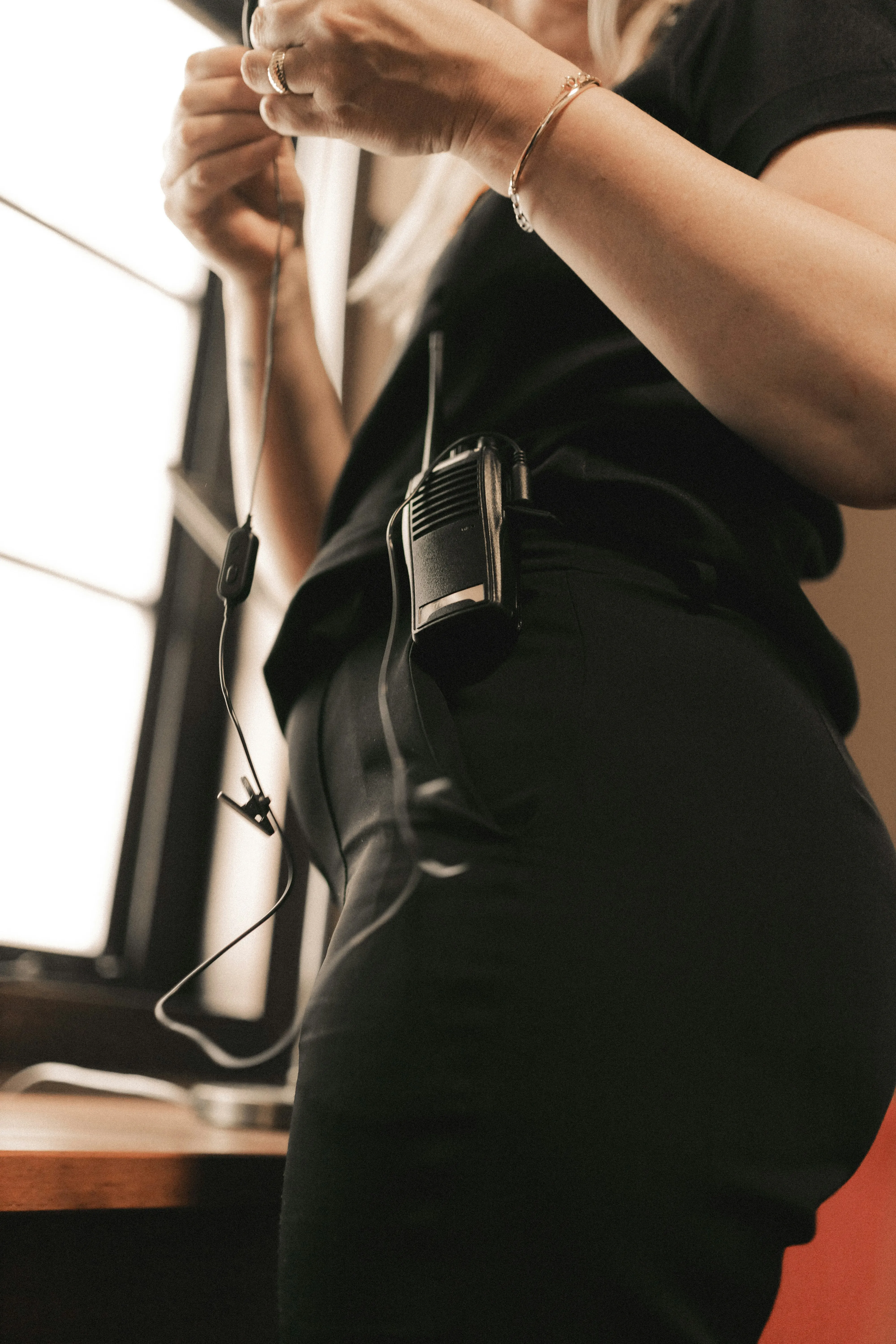
Wireless microphones are particularly useful when a presenter, speaker or performer needs to move freely without holding a microphone. But choosing a wireless system involves more than simply deciding that you don't want a cable. Two of the most useful hands-free options are lapel microphones and headset microphones. Both connect to a small bodypack transmitter, but they place the microphone in very different positions, which affects sound quality, feedback resistance, appearance and how the microphone is used.
For conferences, presentations, training sessions, panel discussions and other functions involving several speakers, there is another consideration: how many wireless microphones need to operate at the same time. Choosing the right type of microphone and the right number of channels can make a considerable difference to how easily the system works on the day.
What Is a Wireless Lapel Microphone?
A lapel microphone, also called a lavalier microphone, is a small microphone normally clipped to the presenter's clothing. A thin cable connects the microphone to a bodypack transmitter worn by the presenter, and the transmitter sends the audio wirelessly to a receiver connected to the sound system.
The major advantage is discretion. A lapel microphone is small and unobtrusive, leaving both hands completely free. That makes it popular for presentations, conferences, interviews, ceremonies, training sessions and other situations where the microphone should not dominate the presenter's appearance.
What Is a Wireless Headset Microphone?
A headset microphone also connects to a bodypack transmitter, but the microphone is supported by a lightweight headset and positioned close to the user's mouth. Because the microphone remains close to the mouth as the presenter moves or turns their head, the level reaching the microphone tends to remain more consistent.
That close microphone position can also provide more usable voice level before feedback becomes a problem. For energetic presenters, instructors, performers or anyone moving around substantially while speaking, a headset microphone can therefore be the better choice.
Lapel or Headset: Which Is Better?
Neither type is automatically better. The right choice depends on how the microphone will be used.
A lapel microphone is often the better option when appearance and unobtrusiveness are important and the speaker is presenting in a relatively controlled environment. Typical applications include corporate presentations, interviews, seminars, ceremonies, training sessions and formal speaking engagements. They work particularly well when the presenter speaks clearly and the PA does not need to operate at extremely high levels.
A headset microphone generally has a technical advantage when consistent voice level, freedom of movement and resistance to feedback are more important than keeping the microphone visually discreet. Because the microphone capsule sits close to the person's mouth, it captures a stronger direct voice signal. A lapel microphone is normally attached considerably further away, often around the upper chest, and may consequently require more gain to achieve the same voice level through the PA.
Correct placement also matters. Moving a lapel microphone too far down the clothing reduces the amount of direct voice reaching it, while clothing or jewellery rubbing against the microphone can create unwanted noise. With a headset, the microphone moves with the speaker's head, so turning to look at a screen or another person does not produce the same change in microphone distance.
What If I Need Several Wireless Microphones?
This is common for conferences, panel discussions, training sessions and presentations involving multiple speakers. Each person can have their own bodypack transmitter and microphone, allowing several presenters to be ready without swapping microphones during the session.
Multiple wireless microphones require a system designed to operate several channels simultaneously. Each active transmitter needs a corresponding receiver channel, and the wireless frequencies need to be configured so that the systems can operate together reliably. The receiver outputs then need to be combined before the sound reaches the PA system.
This is where a mixer becomes particularly useful. A mixer provides independent control over each microphone, which becomes increasingly important as the number of presenters increases. One person may naturally speak much more loudly than another, while a microphone that is not currently being used may pick up unnecessary room sound. Individual mixer channels allow each microphone to be adjusted independently before the combined signal is sent to the PA.
How Does a Wireless Microphone Connect to a Speaker?
A wireless microphone does not normally transmit directly to the PA speaker. The microphone connects to a bodypack transmitter, which sends the wireless signal to a receiver. The receiver converts that transmission back into an audio signal, which can then be sent through a mixer and into the PA system.
In a simple setup, the receiver may be connected directly to a suitable PA input. When several microphones are being used, the receiver outputs are normally fed into a mixer so that the individual microphone levels can be controlled before the mixed signal goes to the PA. Understanding this distinction is useful because the receiver is the component that connects the wireless part of the system to the conventional audio equipment.
What Causes Feedback With Lapel and Headset Microphones?
Feedback occurs when sound coming from the PA speakers is picked up by a microphone, amplified again and sent back through the speakers. If enough of that signal makes its way around the loop, the familiar ringing or squealing sound results.
Microphone and speaker positioning are therefore important. Lapel microphones can be more challenging because they are positioned further from the speaker's mouth and consequently may require more gain. Headset microphones usually allow the microphone to capture more voice relative to the sound coming from the PA. Correct speaker positioning, sensible gain settings and good microphone technique all contribute to achieving useful volume without feedback.
Wireless Microphones for Conferences and Presentations
Multi-microphone wireless systems are particularly useful when a function has several presenters. Rather than passing one handheld microphone from person to person, individual speakers can be fitted with their microphones before they are needed. For a panel discussion, microphones can remain assigned to individual participants, while conferences and seminars can have presenters prepared in advance so that transitions happen quickly.
Lapel and headset microphones can also be mixed within the same system according to the needs of different presenters. Someone delivering a relatively static presentation might prefer the discreet appearance of a lapel microphone, while another presenter who moves around extensively may be better suited to a headset.
Wireless Lapel & Headset Microphone Hire in Adelaide
Audio Hire offers a preconfigured wireless microphone system for functions requiring 2, 4 or 8 microphones. The wireless receivers and rack mixer are installed together in a case and prewired, reducing the amount of equipment customers need to assemble themselves. The system connects to the PA as a combined microphone setup rather than requiring customers to build a multi-channel wireless rack from individual components.
Customers can choose lapel or headset microphones, allowing the system to be configured around the people who will actually be using it. This makes it particularly useful for conferences, panel discussions, presentations, seminars, training sessions and other situations where several people need hands-free microphones.
The system is intended as a cost-effective option for straightforward applications. Professional wireless microphone options are also available where a production requires a higher-specification solution. Audio Hire can provide the microphone system for connection to a suitable existing PA, or supply an appropriate PA system and speakers as part of the hire.
If you're unsure whether lapel or headset microphones are better for your application, tell us how many people will be speaking, what they will be doing while they speak and the type of venue you're using. We can help determine the most appropriate configuration.