.AHLogo1200x1200Black-07578d9b18173fee3d04bf845fdf5007eba8c3c451a934328392e5221830e241.png)
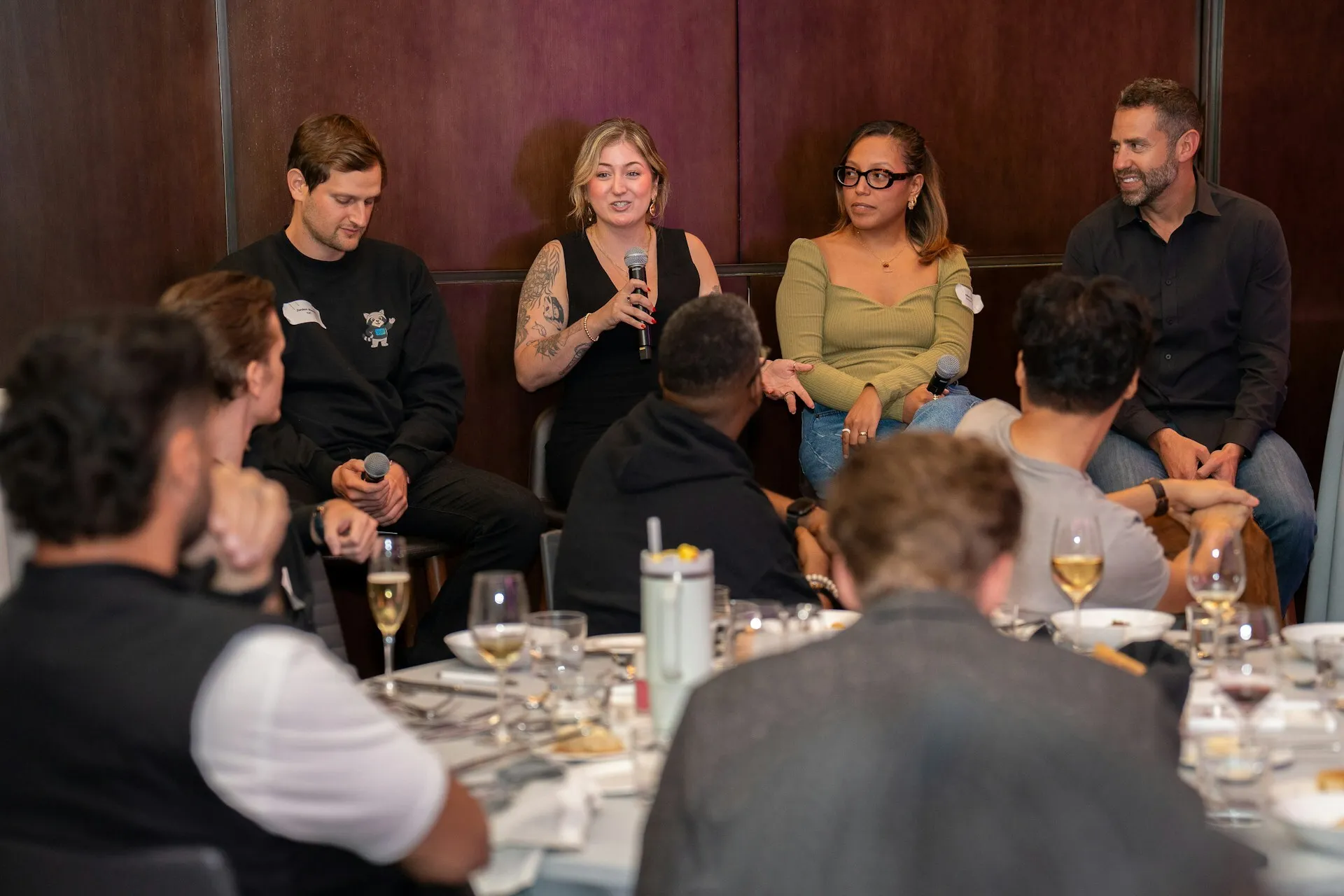
If several people are speaking at your event, you might assume you only need one microphone.
After all, they can simply pass it to the next person.
Sometimes that's perfectly adequate.
At other events, relying on one microphone creates unnecessary pauses, awkward handovers and people trying to work out who has the microphone when somebody else needs it.
So, how many microphones should you hire?
For simple events with consecutive speeches, one microphone may be enough. If you have an MC, multiple presenters, panel discussions, audience questions or live performers, having additional microphones can make the event considerably easier to run.
The right number depends less on how many people attend and more on who needs to speak, when they need to speak and whether they need to speak at the same time.
One Microphone Can Be Enough
Don't hire extra microphones simply because several people will speak during the event.
Imagine a wedding with four speeches.
Each person walks to the same position, delivers their speech and then hands over to the next person.
One microphone can work perfectly well.
The same applies to a simple corporate presentation where each presenter speaks from the same position one after another.
For fixed-position speech, a wired microphone can also be a straightforward and reliable choice.
The Shure PGA48 is suitable for general speech and event applications, while the Shure SM58 is a popular choice for professional vocals and live performance.
The important question isn't:
How many people will speak?
It's:
How many people need convenient access to a microphone during the same part of the event?
Should the MC Have Their Own Microphone?
Often, yes.
An MC may need to make announcements throughout the event rather than only speaking at one scheduled time.
If there's only one microphone, it may continually move between the MC and other speakers.
Giving the MC a dedicated microphone means it's available whenever they need it.
A wireless microphone can be particularly useful if the MC moves around the room rather than remaining in one position.
You can then have another microphone available for speeches or presentations.
It's a relatively small change to the equipment setup, but it can make transitions much smoother.
How Many Microphones Do I Need for Wedding Speeches?
For a simple sequence of wedding speeches, one microphone may be sufficient.
However, consider the complete reception.
You might have:
- an MC
- several speeches
- a DJ
- a singer or musician
- announcements throughout the evening
If the MC is regularly using the microphone, having another available for speeches can be convenient.
It also avoids continually moving the same microphone between different areas of the venue.
For an important event such as a wedding, an additional microphone can provide useful flexibility if the running order changes or another person unexpectedly decides to speak.
You don't necessarily need a microphone for every person giving a speech.
But having one for the MC and another for speakers can be a very practical arrangement.
How Many Microphones Do I Need for a Panel Discussion?
Panel discussions are where microphone numbers become particularly important.
Imagine four people seated on stage with one microphone.
The first person answers a question and passes the microphone to the second.
The second wants to respond to something the first person said, so the microphone goes back.
Then the moderator asks the third participant a question.
The microphone moves again.
Technically, the system works.
But the conversation can feel slow and unnatural.
Where practical, giving each panel participant access to their own microphone allows the discussion to flow much more naturally.
It also allows whoever is operating the sound system to manage the individual microphone levels.
That's useful because people don't all speak at the same volume.
Don't Forget the Moderator
A four-person panel doesn't necessarily mean four microphones.
If there's also a moderator, that's another person who needs to speak regularly.
So a four-person panel plus moderator could potentially require five microphones.
Whether every person needs a dedicated microphone depends on the format and budget.
But count everyone who actively participates in the discussion rather than only the people described as "panel members".
What About Audience Questions?
Audience Q&A creates another microphone requirement that's easy to overlook.
If all the microphones are being used on stage, how will someone in the audience ask a question?
One option is to remove a microphone from the stage each time.
A more convenient approach is to have a separate wireless handheld microphone available for the audience.
Someone can carry it to the person asking the question while the presenters retain their microphones.
For a larger audience, having two roaming microphones can make the process even smoother.
One can move towards the next question while the other is being used.
You don't need two audience microphones for every Q&A session, but it's worth considering when the audience is large or participation is an important part of the event.
How Many Microphones Do I Need for a Corporate Event?
Start with the running order.
Suppose your event includes:
- one MC
- one keynote speaker
- a four-person panel
- one moderator
- audience Q&A
Trying to run all of that through one microphone would be possible, but cumbersome.
A better arrangement might include separate microphones for the people who need regular access, plus another for audience questions.
The exact number depends on how the program is structured.
That's why it's useful to provide the audio hire company with the event format, not simply say:
"We need some microphones."
Tell us who is speaking and how the sessions work.
From there, the microphone requirement becomes much easier to determine.
Wired or Wireless?
The number of microphones is only part of the decision.
You also need the right type.
Wired microphones
Wired microphones work particularly well when the user remains in a fixed position.
They're useful for:
- speeches
- singers
- musicians
- fixed presentation positions
They're straightforward, reliable and generally more economical than wireless systems.
Wireless microphones
Wireless microphones are useful when movement matters.
Consider wireless for:
- MCs
- roaming presenters
- audience Q&A
- interactive sessions
- performers who need freedom of movement
You don't necessarily need to choose one or the other.
Many events benefit from a combination.
For example, you might use a wired microphone at a fixed speaking position and a wireless microphone for the MC.
Do Singers Need Their Own Microphones?
Usually, yes.
If you have live singers or musicians, establish their microphone requirements separately from the microphones being used for speeches.
A vocalist may require a microphone such as the Shure SM58, which is widely used for live vocals.
A band may require several microphones for vocals and instruments.
Don't assume the microphone used for wedding speeches can simply be handed to the singer when the performance starts.
Ask performers what they require before finalising the equipment booking.
They may have a technical rider listing microphones, stands, mixer inputs and other requirements.
Remember That Every Microphone Needs Somewhere to Connect
Adding microphones can also affect the rest of the sound system.
If you have:
- two speech microphones
- an MC microphone
- two audience microphones
you now have five microphone sources.
Your mixer needs enough suitable inputs to accommodate them.
And that's before you add music, laptops or performers.
For smaller systems, a compact mixer such as the Yamaha MG06 may provide the inputs required.
For events involving several microphones and other sources, additional mixer capacity may be necessary.
This is why it's useful to plan the microphones and mixer together rather than treating them as unrelated equipment.
Do I Need Microphone Stands?
Possibly.
A handheld microphone doesn't necessarily need to remain handheld.
A stand can be useful for:
- fixed speeches
- vocalists
- musicians
- presentations from one position
It also gives the speaker somewhere appropriate to place the microphone rather than leaving it on a table or chair.
When booking microphones, think about how each one will physically be used.
The microphone itself may only be one part of the requirement.
Browse the Audio Hire equipment range for microphones, mixers, stands and related equipment.
Should I Hire a Spare Microphone?
For a casual event, probably not.
For an important event where microphones are central to the program, having an additional microphone available can be useful.
A spare doesn't necessarily have to remain unused.
It might become:
- an audience microphone
- an extra microphone for an unexpected speaker
- an additional MC microphone
- a backup if the running order changes
This is particularly worth considering for weddings, conferences, awards nights and other events where a microphone problem could interrupt an important moment.
A little additional capacity can provide flexibility without significantly complicating the system.
Who Is Going to Manage All These Microphones?
With one microphone, there's usually very little to manage.
With six, the situation changes.
Someone may need to:
- adjust individual levels
- mute microphones that aren't being used
- monitor wireless systems
- manage handovers
- respond when someone speaks unexpectedly
- troubleshoot problems
For smaller events, the organiser or another nominated person may be comfortable doing this.
For conferences, panel discussions, performances and more complicated events, this is one of the situations where adding a sound technician can become particularly useful.
The technician isn't simply there in case something goes wrong.
They're actively managing the microphones so speakers can concentrate on speaking and the organiser can concentrate on the event.
A Simple Microphone Guide
As a starting point:
Simple speeches:
One microphone may be enough.
MC + speeches:
Consider a dedicated MC microphone plus another for speakers.
Panel discussion:
Ideally, provide convenient microphone access for each active participant and moderator.
Audience Q&A:
Consider at least one additional wireless handheld microphone.
Large audience Q&A:
Two roaming wireless microphones may help questions move faster.
Live performers:
Confirm microphone requirements directly with the performers.
These aren't rigid rules.
They're starting points for thinking about how the event will actually work.
Don't Count Speakers—Think About the Conversation
The easiest mistake is counting everyone who speaks during the entire event and assuming that tells you how many microphones you need.
It doesn't.
Ten people delivering speeches consecutively from one position might comfortably use one microphone.
Four people having a fast-moving panel discussion might work much better with four.
Think about:
- who speaks simultaneously
- who needs immediate access
- who needs to move
- whether microphones need to remain on stage
- whether the audience participates
- whether performers need separate equipment
That will give you a much more useful answer.
Planning Microphones for Your Event
You don't need to know exactly which microphone models to hire before contacting us.
Tell us what will happen.
If you have an MC, several speeches, a panel discussion, audience questions or live performers, include those details.
From there, we can help determine how many microphones are appropriate and whether wired, wireless or a combination makes the most sense.
If you already know what you need, browse the Audio Hire equipment range.
If you're also arranging the complete sound system, explore our PA hire options.
And if you're unsure how to manage several microphones during the event, contact Audio Hire to discuss equipment, setup and technical support.
The goal isn't to hire as many microphones as possible. It's to make sure the right microphone is available whenever somebody needs to speak.