.AHLogo1200x1200Black-07578d9b18173fee3d04bf845fdf5007eba8c3c451a934328392e5221830e241.png)
TL;DR
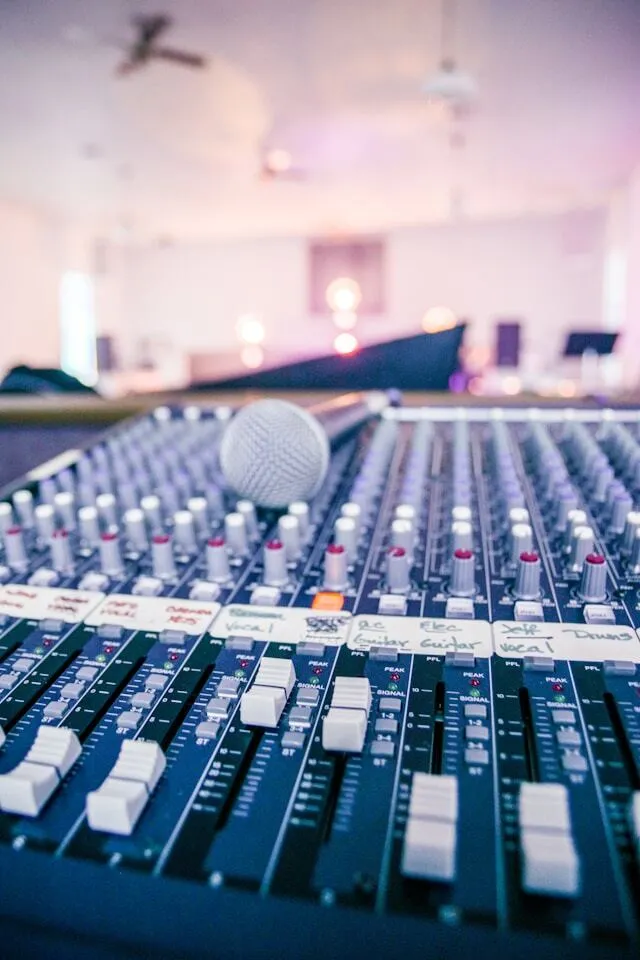
An audio mixer (also known as a mixing console or soundboard) is the central control hub of any sound system. It takes multiple incoming audio signals—such as wireless speech microphones, instruments, and background music playlists—balances their individual volume levels, adjusts their tonal EQ, and blends them into a single clean output sent to your powered speakers.
Whether hosting an intimate gathering of 30, a medium function of 60, or a full venue of 100 guests, using an audio mixer prevents sudden volume spikes, eliminates feedback, and ensures crisp vocal clarity. Pairing a mixing console with dedicated speaker packages and professional microphones gives you complete acoustic control over your event's sound.
Pricing Summary
|
Product / Package |
Category / Specification |
Ideal Guest Count |
Daily Rate (AUD) |
Product Link |
|
Shure SM58 Professional Microphone |
Industry Standard Dynamic Mic |
Speeches & Formal Presentations |
$18.00 / day |
View Shure SM58 |
|
Wireless Handheld Microphone System |
UHF Wireless System |
Mobile MCs & Celebrant Vows |
$45.00 / day |
View Wireless Mic |
|
Microphone Stand |
Heavy-Duty Adjustable Boom |
Hands-Free Podium / Speech Setup |
$10.00 / day |
View Mic Stand |
|
2 x 1000W 12" Speaker Package |
2,000W Peak Powered PA |
Up to 30 Guests |
$130.00 / day |
View 12" Package |
|
2 x 1500W 15" Speaker Package |
3,000W Peak Powered PA |
Up to 60 Guests |
$185.00 / day |
View 15" Package |
|
5600W EV Speaker & Subwoofer Package |
5,600W Electro-Voice System |
Up to 100 Guests |
$350.00 / day |
View 5,600W Package |
Key Takeaways
- Centralised Audio Control: A mixer allows you to adjust the volume of speeches, instruments, and background music independently without touching the main speakers.
- Equalisation (EQ) & Feedback Control: Built-in EQ controls help shape frequencies, boosting vocal presence so speeches cut through ambient room noise while cutting frequencies that cause feedback.
- Multi-Input Flexibility: Connect wireless microphones, wired lectern mics, and media players simultaneously into one streamlined control unit.
- Pristine Signal Delivery: Feeding a balanced mixer output into complete powered two-speaker systems preserves stereo imaging and prevents signal clipping.
What Is an Audio Mixer and How Does It Work?
If powered speakers are the "engine" of a PA system, the audio mixer is the "steering wheel."
At its core, an audio mixer receives sound from various input sources, combines those signals, processes their volume and frequency levels, and routes the blended main mix to your loudspeaker system. Without a mixer, plugging multiple microphones or playback devices directly into individual speakers quickly leads to unbalanced volume levels, harsh distortion, and limited control.
Key Functions of an Audio Mixer in an Event Setup
- Preamplification & Gain Staging: Microphones output very weak electrical signals. The mixer's internal preamps boost these signals to a strong "line level" without adding background hiss or noise.
- Channel Volume Balancing: Allows an MC or technician to seamlessly lower background music the second a speaker steps up to the microphone.
- Frequency Shaping (EQ): Fine-tunes high, mid, and low frequencies. This ensures speech sounds natural while removing muddy low-end rumble.
- Master Volume Management: Controls the overall room volume from a single master fader, protecting powered speaker amplifiers from overloading.
Integrating Mics and Speakers with Your Mixer
Building a professional sound system requires matching your audio mixer with high-quality input devices and dedicated two-speaker packages tailored to your room footprint.
Step 1: Connecting Professional Microphones
Clear audio starts at the source. Connect a wired Shure SM58 Professional Microphone mounted on a sturdy Microphone Stand into the mixer's XLR channels for lectern speeches and formal presentations. For mobile MCs, celebrants, or interactive Q&A sessions, plug a Wireless Handheld Microphone System into the console to give speakers complete freedom of movement around the venue.
Step 2: Routing Signal to Powered Speaker Packages
Once your mixer has balanced the microphone and media inputs, the master stereo output connects directly into a complete PA setup tailored to your crowd size:
- Intimate Gatherings (Up to 30 Guests): Route your mixer output into the 2 x 1000 Watt Speaker Package. This dual 12-inch active setup delivers 2,000 watts of peak power, providing crisp vocal clarity and balanced background music for smaller rooms.
- Medium Functions & Party Environments (Up to 60 Guests): Pair your console with the 2 x 1500 Watt 15†Speaker Package. Its larger 15-inch drivers push 3,000 watts of full-range sound, providing rich bass and clear mids without requiring external subwoofers.
- High-Impact Celebrations & Open Spaces (Up to 100 Guests): For events requiring deep bass response and high SPL output, run your mixer output into the 5600W EV Speaker and Subwoofer Package. Dedicated Electro-Voice subwoofers handle the low frequencies, allowing the top cabinets to deliver pristine speech and music across a full dance floor.