.AHLogo1200x1200Black-07578d9b18173fee3d04bf845fdf5007eba8c3c451a934328392e5221830e241.png)
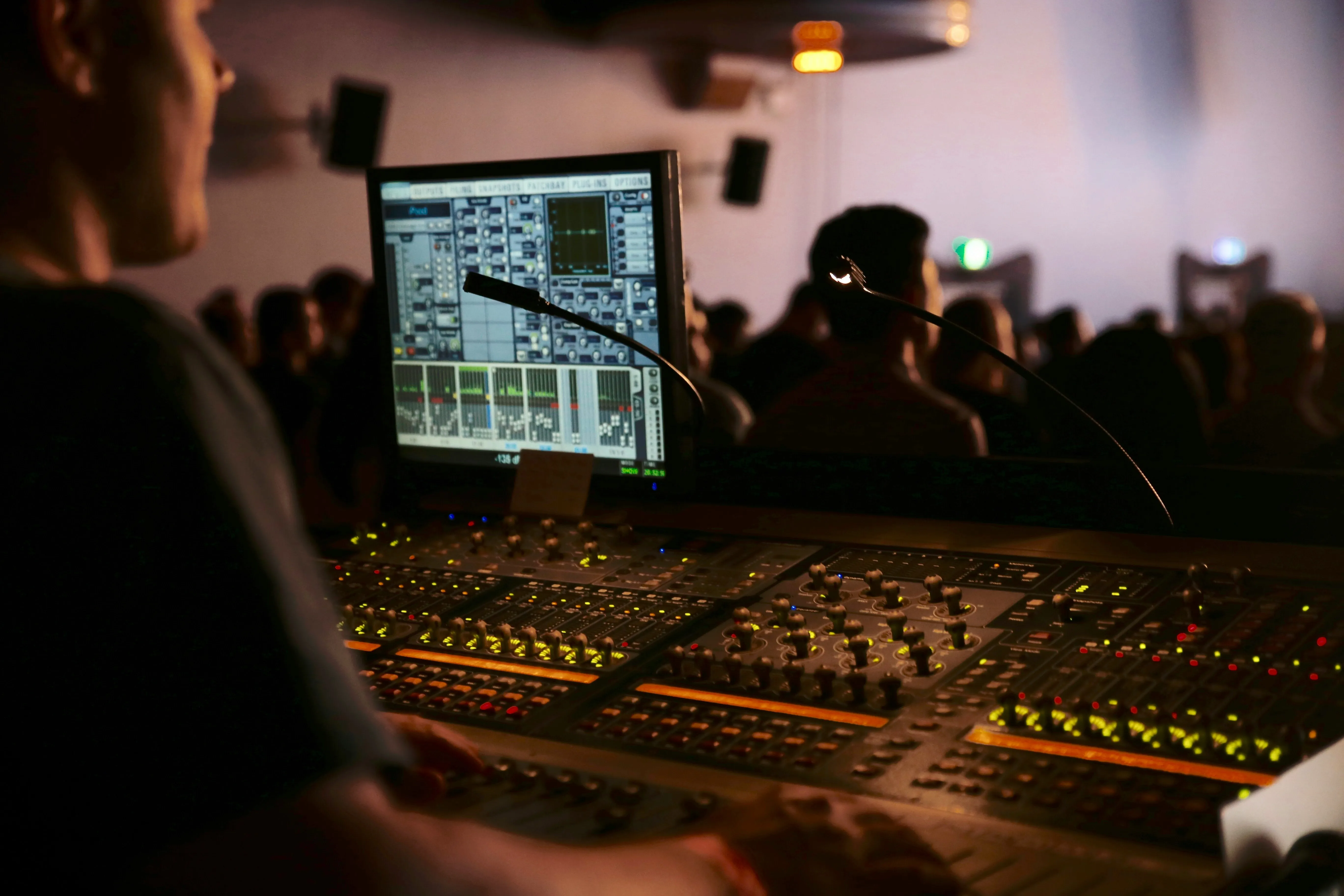
Not every event needs a sound technician. A small presentation with a couple of speakers and a single microphone can often be managed by the organiser or venue team. As an event becomes larger or the audio setup becomes more complicated, however, having someone responsible for the sound can make a significant difference.
For event coordinators, the important question isn’t simply whether an event is large enough to justify a technician. It’s whether there is enough happening with the audio that someone needs to be responsible for setting up, operating and troubleshooting the system.
What does an event sound technician do?
A sound technician is responsible for making sure the event’s audio system works properly and is operated correctly throughout the event.
Depending on the job, that can include setting up speakers and microphones, connecting audio sources, checking levels, managing microphones during presentations, controlling music playback and responding to problems during the event.
The technician can also make adjustments as the event changes. A conference may move from a presentation to a panel discussion, for example, while a wedding may move from speeches to background music and then dancing.
The exact responsibilities depend on the event and the level of technical support required.
When can an event usually manage without a technician?
A technician may not be necessary when the audio setup is straightforward and someone at the event is comfortable operating it.
A small presentation with a pair of speakers and one microphone is a good example. Once the system has been correctly set up, there may be little for someone to adjust during the event.
Similarly, a simple speech or announcement at a private function may not require dedicated technical operation.
The key consideration is whether someone understands the equipment well enough to operate it and whether there is enough complexity or risk to justify having a dedicated person responsible for the audio.
When should you consider hiring a technician?
A technician becomes more useful when there are multiple audio sources, microphones or changes throughout the event.
Corporate conferences, panel discussions, live music, larger presentations, awards ceremonies and events with DJs can all benefit from having someone responsible for the sound.
If several people need microphones, presentation audio needs to be played from a laptop, music needs to be managed and the running order changes throughout the day, having one person focused on the audio means the event coordinator isn’t also trying to operate the PA.
For more straightforward events, PA Hire Adelaide can provide the equipment required without necessarily requiring a technician.
Corporate conferences and presentations
Corporate events are a good example of where technical support can become valuable even when the event isn’t particularly loud.
A conference might involve an MC, multiple presenters, video presentations, panel discussions, audience questions and background music. Each part of the programme can have different audio requirements.
A technician can manage microphone levels, switch between sources and make sure presenters are ready before they speak. This allows the event coordinator to concentrate on the schedule, speakers and guests rather than standing beside the mixer throughout the event.
If you’re planning a corporate event, start by looking at the complete running order. The more changes and audio sources involved, the more useful dedicated technical support becomes.
Panel discussions
Panel discussions are another situation where having someone responsible for the audio can be worthwhile.
A panel might involve several microphones being used simultaneously, with the moderator and multiple panellists contributing to the discussion. Audience questions can introduce another microphone into the system, and the technician may need to manage microphone levels as different people speak.
The microphone requirements should be considered before the event. Our guide to How Many Microphones Do You Need for an Event? explains how the number of speakers and the format of the event affect microphone requirements.
The technician can then operate those microphones during the discussion rather than leaving the moderator or event coordinator to manage the equipment.
Live music
Live music generally increases the complexity of an event’s audio requirements.
A solo performer may have a relatively simple setup, but a band can involve multiple microphones, instruments, monitor speakers and a mixer with numerous inputs. The system also needs to be checked before the performance and monitored while the musicians are playing.
For larger music events, the 5600w EV Speaker and Subwoofer Package provides a larger PA configuration with full-range speakers and subwoofers.
The more equipment and performers involved, the more valuable it can be to have someone who understands the system responsible for operating it.
Weddings and private functions
A wedding doesn’t automatically require a sound technician. A simple ceremony or reception with straightforward speeches may be manageable without one.
The need for technical support increases when the day involves several microphones, different locations, music playback, announcements, a DJ or live entertainment.
The transition between different parts of a wedding can also make technical support useful. The audio requirements for the ceremony may be quite different from the reception, and the system may need to change as the event moves from speeches to music and dancing.
The Hire by Event Type guide provides more information about equipment options for weddings and other events.
What if there is a DJ?
If a DJ is providing the entertainment, establish what the DJ is supplying before deciding whether you need a technician.
Some DJs provide their own complete sound system and operate it themselves. Others may require the organiser or venue to provide the PA.
Find out who is responsible for the speakers, subwoofers, microphones, mixer and connections, and who will operate the system during the event.
If the DJ is providing and operating their own equipment, an additional sound technician may not be necessary. If the event involves a separate PA system, speeches, announcements or other audio sources, dedicated technical support may still be useful.
How complicated is the sound system?
One of the simplest ways to decide whether you need a technician is to look at the complexity of the system.
A pair of speakers and one microphone is relatively straightforward. A system involving several speakers, multiple microphones, a mixer, wireless microphones, music playback, a DJ and live performers is considerably more complicated.
For example, a small presentation might use the 2 X 1000 Watt Speaker Package with a microphone. A larger event could involve a 2 x 1500 Watt 15” Speaker Package, several microphones, a mixer and additional equipment.
The equipment itself isn’t necessarily the deciding factor. What matters is whether somebody at the event knows how to set it up and operate it confidently.
What happens if something goes wrong?
One of the biggest benefits of having a technician is having someone responsible for dealing with problems.
A microphone may stop working, a presenter may accidentally change a laptop’s audio settings, a cable may become disconnected or the volume may need to be adjusted.
Without a technician, the event coordinator or venue staff may suddenly become responsible for diagnosing the problem.
With a technician, there is someone whose job is to identify and resolve audio problems while the event continues.
This can be particularly valuable for important corporate events, conferences, public performances and events where there is little opportunity to stop and troubleshoot.
Do you need a technician for setup only?
Not necessarily. Some events mainly need assistance with getting the system installed and tested, while others benefit from having someone operate the system throughout the event.
If the event is simple once everything has been connected, setup assistance may be enough. If microphones, music sources and other equipment need to be actively managed during the event, having the technician remain on site may provide greater value.
Discuss the event schedule and responsibilities when booking so the level of support matches what is actually required.
How to decide whether you need a technician
Start with the running order rather than the guest count.
If the event involves one microphone, one audio source and a straightforward presentation, dedicated technical support may not be necessary.
If there are multiple presenters, panel discussions, wireless microphones, live music, DJs, video presentations or frequent changes between audio sources, the case for a technician becomes much stronger.
Also consider who will operate the system. If the event coordinator, MC or venue staff would otherwise have to manage the sound, ask whether that is really where their attention should be during the event.
Event coordinator checklist
Before deciding whether to hire a technician, consider the overall complexity of the event. How many microphones will be used? Will several people need to speak? Will there be a panel? Is there music playback, a DJ or live performance? Will the audio system change during the event? Does the venue have someone who can operate the equipment? What happens if there is an audio problem?
If the answer to several of these questions is yes, dedicated technical support is worth considering.
The right equipment still matters
A technician can’t compensate for an inappropriate sound system. The PA still needs to provide enough coverage and output for the venue and event.
The same applies to microphones and other equipment. If several presenters need to speak, the system needs enough microphone inputs. If the event includes music and requires strong bass, the speaker configuration needs to be appropriate for that application.
For help choosing the equipment itself, see Speaker Hire Adelaide, Microphone Hire Adelaide and Sound System Hire Adelaide.
When a technician is probably worth it
A sound technician is usually worth considering when the audio is important to the success of the event and there is enough complexity that the organiser shouldn’t also be responsible for operating the system.
That might mean a corporate conference with multiple presenters, a panel discussion with several microphones, a live performance, a larger wedding reception, or an event where music and speeches need to be managed throughout the day.
For a simple function, professional equipment may be all you need. For a complex event, having someone responsible for the sound can remove a significant source of stress from the event coordinator.
Need help planning event audio?
If you’re organising an event in Adelaide and aren’t sure whether you need equipment, technical support or both, describe the event and its running order when you enquire.
Tell Audio Hire the venue, approximate audience size, event format and what will happen during the event. Include information about speeches, presentations, microphones, music, DJs or live performers.
From there, we can help you determine what equipment is appropriate and whether technical support would be useful.
You can explore Event Technician Hire Adelaide, browse PA Hire Adelaide, or browse the full range of audio equipment.
If you already know what you need, you can browse the equipment and book online